Can a Mobile Camera See Through Clothes or Walls? The Truth About X-Ray and Thermal Camera Apps
Have you ever watched a video showing a smartphone scanning a wall or displaying a colorful image of the human body? These videos often create curiosity about whether mobile cameras can actually see hidden objects, detect body heat, or reveal what is behind everyday materials.
Today, many Android and iPhone applications advertise features such as X-ray camera effects, thermal imaging, infrared scanning, and night vision. But how much of this technology actually works?
Before downloading a scanner app, it is important to understand what a normal smartphone camera can detect and which features require specialized equipment.
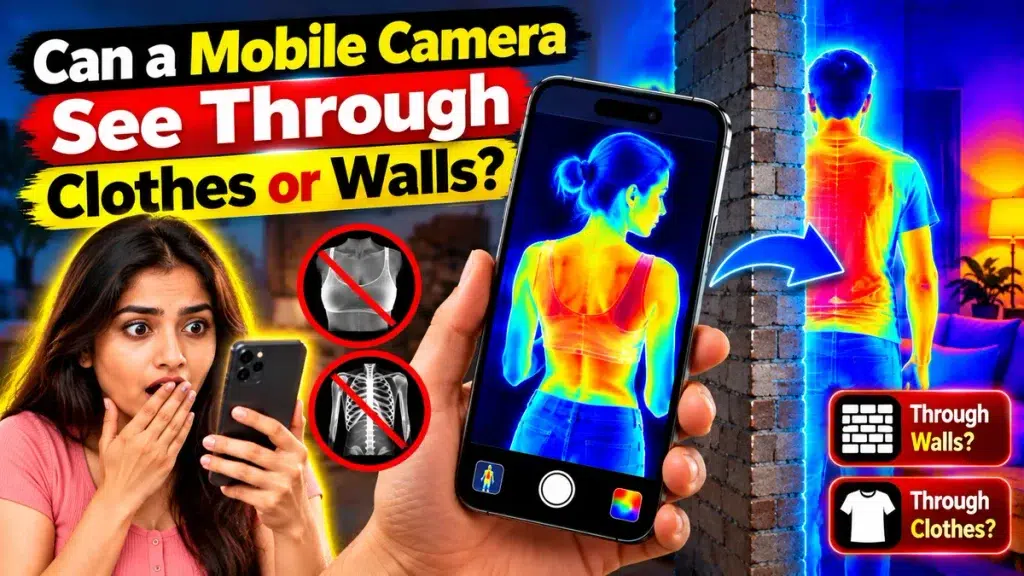
Can a Mobile Camera Really See Through Clothes?
No, an ordinary smartphone camera cannot see through opaque clothing like an X-ray machine.
Regular mobile cameras capture visible light reflected from objects. They do not have the technology required to reveal the human body beneath clothing.
Some applications create simulated X-ray effects using animations, image processing, or predefined graphics. These effects are designed for entertainment rather than genuine body scanning.
Specialized infrared technology works differently, but it does not turn an ordinary smartphone into a see-through camera.
Can a Mobile Camera See Through Walls?
A standard smartphone cannot directly see objects or people through solid walls.
Even genuine thermal imaging cameras do not see through walls. Instead, they detect infrared radiation from surfaces.
For example, a thermal camera may reveal unusual temperature patterns on a wall caused by:
- Missing or damaged insulation
- Heating pipes
- Air leakage around windows
- Possible moisture-related problems
- Electrical components producing unusual heat
These patterns may indicate areas requiring further inspection, but they do not provide a direct view behind the wall.
What Can a Thermal Camera Actually Detect?
Thermal imaging technology uses specialized infrared sensors to visualize surface temperature differences.
Warmer areas may appear red, orange, or yellow, while cooler areas may appear blue or purple, depending on the selected color palette.
Thermal cameras can be useful for inspecting electrical equipment, evaluating building insulation, checking heating systems, and observing exposed body-surface heat patterns.
However, most smartphones require an external thermal camera attachment to perform genuine infrared imaging.
🔥 DISCOVER BODY HEAT SCANNING Can Your Phone Really Scan Human Body Heat? Discover how thermal camera technology reveals invisible heat patterns — and which apps actually work! SEE HOW BODY HEAT SCANNING WORKS »Mobile Camera vs Thermal Camera vs X-Ray – Comparison
| Camera Technology | What It Can Detect | Additional Hardware |
|---|---|---|
| Normal Mobile Camera | Visible objects and surroundings | No |
| Thermal Camera | Surface heat patterns | Usually |
| Night Vision Camera | Low-light scenes using suitable sensors | Sometimes |
| X-Ray Filter App | Simulated X-ray effects | No |
| Medical X-Ray System | Internal structures using X-rays | Specialized medical equipment |
Understanding these differences helps users distinguish genuine technology from visual effects.
Popular Camera Apps and Their Features
1. Thermal Camera Apps
Thermal imaging applications work with compatible infrared equipment to display temperature differences.
Solutions such as FLIR ONE and Seek Thermal are designed for supported thermal camera devices.
2. X-Ray Camera Filter Apps
These applications generate simulated X-ray-style pictures using digital effects.
They cannot detect bones, internal organs, or hidden objects behind solid surfaces.
3. Night Vision Camera Apps
Night vision applications may improve visibility in low-light situations through image processing.
Actual infrared night vision requires suitable sensors or illumination equipment.
4. Infrared Camera Apps
Certain applications support external infrared camera accessories for specialized imaging tasks.
Their capabilities depend on the connected hardware.
Why Do Scanner Videos Look So Real?
Many social media videos use editing effects, animations, thermal color filters, and artificial scanning graphics.
Some display realistic-looking bones or internal organs on a smartphone screen. However, these visuals do not prove that the phone has actually scanned anything beneath the surface.
Always check the application’s features, hardware requirements, and developer information before trusting such demonstrations.
How to Choose a Genuine Thermal Camera App
If you want to explore real thermal imaging, consider these factors:
Compatibility: Confirm that the application supports your phone.
Infrared Hardware: Check whether an external thermal sensor is required.
Image Quality: Compare resolution and available temperature visualization modes.
Cost: Consider the total price of the app and any necessary accessories.
Privacy: Review the app’s requested permissions and privacy policy.
For practical inspections, specialized equipment is more suitable than entertainment filters.
Frequently Asked Questions
1. Is there a real see-through camera app for Android?
No ordinary Android app can transform a standard smartphone into an X-ray camera capable of seeing through opaque clothing or walls.
2. Can thermal cameras detect human body heat?
Yes. Genuine thermal cameras can detect temperature patterns on exposed body surfaces, but they cannot see internal organs.
3. Can a phone camera see through concrete walls?
No. Standard mobile cameras and conventional thermal cameras cannot see directly through concrete.
4. Are X-ray scanner apps real?
Most consumer X-ray-style camera apps provide simulated effects rather than actual X-ray imaging.
5. Can I use thermal imaging without buying a camera?
Only if your phone already contains suitable thermal hardware. Otherwise, a compatible infrared accessory is generally necessary.
Conclusion
Mobile camera technology offers interesting features, but ordinary smartphones cannot see through clothes, walls, or the human body.
Thermal cameras can reveal surface temperature differences, while X-ray-style apps generally provide simulated effects.
Understanding these limitations helps you choose reliable camera applications and avoid misleading advertisements.