Vehicle Insurance Details Online – Check Policy Status, Validity & Expiry Date
Vehicle insurance is an important part of owning and using a motor vehicle in India. Whether you own a car, motorcycle, scooter, or another motor vehicle, keeping track of your insurance policy can help you confirm whether your current coverage is active and identify when you may need to review or renew it.
If you cannot immediately find your physical or digital policy document, certain Vehicle Insurance Details Online may be available through authorized vehicle-information services or your insurance provider. Depending on the service and available records, you may be able to check insurance status, validity-related information, insurer details, and other basic vehicle information.
Online insurance checks can also be useful when reviewing documents for a second-hand vehicle. However, a basic online result should not replace the actual policy certificate when you need complete information about coverage, exclusions, add-ons, premium, claims, or other policy conditions.
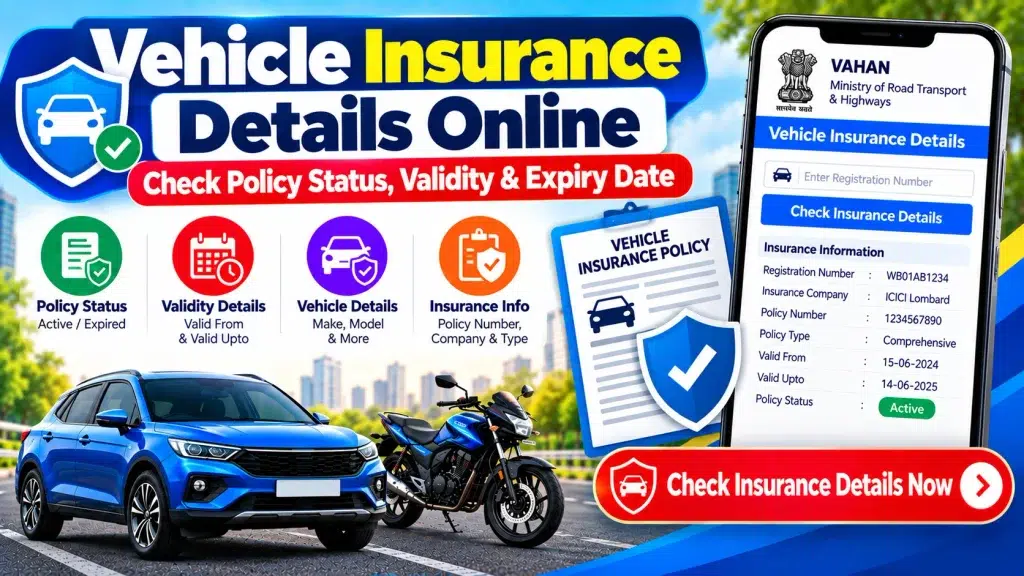
This guide explains how to check vehicle insurance policy status, validity and expiry date online, what information you may need, what to do if insurance details are not showing, and how to verify insurance before purchasing a used vehicle.
What Are Vehicle Insurance Details?
Vehicle insurance details refer to information connected with an insurance policy issued for a particular vehicle.
An insurance policy document can contain important information such as the vehicle registration number, policy number, policyholder information, insurer, policy period, type of coverage, premium-related information, and terms and conditions.
Depending on the online service, only a limited portion of this information may be publicly or conveniently accessible.
For complete and authoritative information about your own insurance policy, the current policy document and insurer’s official records should be treated as the primary references.
Vehicle Insurance Details Online – Quick Overview
| Particular | Details |
|---|---|
| Service | Vehicle Insurance Details Check |
| Vehicle Types | Car, Bike, Scooter & Other Insured Vehicles |
| Common Search Detail | Vehicle Registration Number |
| Possible Information | Policy Status, Insurer & Validity Details |
| Full Policy Details | Available Through Insurer/Policy Document |
| Online Access | Subject to Service & Record Availability |
| Device | Mobile, Tablet or Computer |
| Useful For | Own Vehicle & Used-Vehicle Verification |
| Personal Information | May Be Masked or Restricted |
| Best Final Verification | Current Policy Document / Insurer |
Why Should You Check Vehicle Insurance Status?
Checking insurance information can help vehicle owners keep track of important policy records.
A vehicle owner may want to check insurance status when the policy document is not immediately available, before a renewal, after purchasing a policy, or when comparing online records with the latest insurance certificate.
It can also be useful during the purchase of a used car or bike. A buyer can compare the registration number and available insurance information with documents supplied by the seller.
However, insurance status should always be interpreted carefully. If an online service shows old information after a recent renewal, verify the latest policy directly with the insurer.
What Vehicle Insurance Information Can You Check Online?
The exact information available depends on the service and its access rules. Not every platform provides the same level of detail.
Depending on record availability, you may see information such as:
- Vehicle registration number
- Insurance company or insurer
- Insurance status
- Insurance validity information
- Policy expiry-related information
- Policy reference details where available
- Vehicle make and model
- Vehicle class
- Fuel type
- Registration date
- Other permitted vehicle information
Sensitive information may be restricted or masked to protect privacy.
Details such as complete policy coverage, add-ons, exclusions, deductibles, insured declared value, premium breakup, nominee information, claim history, or personal policyholder information may require access to the actual insurance policy or insurer account.
How to Check Vehicle Insurance Details Online
There can be different ways to review insurance information online. The available method may depend on the insurer, vehicle, and service.
The general process is as follows.
Step 1: Keep Your Vehicle Registration Number Ready
The registration number is commonly used when searching for vehicle-related information.
Check your RC or vehicle number plate and note the complete number.
For example:
WB 00 AB 1234
Make sure that every letter and number is entered correctly.
Step 2: Open an Authorized Service
Use an authorized vehicle-information service or the official online service provided by your insurance company.
Avoid entering personal or vehicle information into unknown websites simply because they promise instant access to complete insurance records.
Step 3: Select the Relevant Vehicle or Policy Service
Find the option related to vehicle information, insurance details, policy servicing, or policy verification.
The exact wording will depend on the platform.
Step 4: Enter the Requested Information
Enter the vehicle registration number or other requested details.
If you are using your insurer’s website or app, you may instead be asked for a policy number, registered mobile number, email address, or account login.
Step 5: Complete Verification
The service may require a captcha, OTP, account login, or another security check.
Complete the verification only on a trusted and authorized platform.
Step 6: Review the Available Policy Information
After successful verification, review the insurance information displayed.
If you need the exact expiry date, coverage type, add-ons, premium, or policy conditions, compare the online result with your latest policy certificate.
How to Check Vehicle Insurance Policy Status
Insurance policy status generally indicates whether the policy record is current, active, expired, cancelled, or otherwise categorized by the insurer or service.
The exact terminology can vary.
If you are checking your own vehicle and the displayed status does not match your latest policy document, do not immediately assume that your coverage is invalid.
A recent purchase or renewal may take time to appear in another connected system.
In such a situation, refer to the policy certificate issued by your insurer and contact the insurance provider if confirmation is required.
How to Check Vehicle Insurance Validity
Insurance validity refers to the period during which a particular insurance policy is effective according to its terms.
Your policy document generally shows the applicable policy period. When checking insurance details online, you may also find validity-related information, depending on the service.
For an accurate check, compare:
| Detail | What to Verify |
|---|---|
| Vehicle Number | Matches your vehicle registration |
| Policy Number | Matches the insurer’s record |
| Insurer | Correct insurance company |
| Policy Period | Check start and end dates |
| Coverage | Verify applicable policy type |
| Vehicle Details | Match make/model where shown |
| Policyholder Details | Verify through your own policy |
| Add-ons | Check actual policy schedule |
If any important detail appears incorrect, contact the insurer.
How to Check Vehicle Insurance Expiry Date
The expiry date is particularly important because it helps vehicle owners know when the current policy period is due to end.
The most reliable place to check the expiry date of your own insurance is the latest policy document issued by your insurer.
Depending on the online service, an insurance validity or expiry-related date may also be displayed alongside the vehicle information.
If the online date differs from your most recent policy certificate, verify the policy directly with the insurer before drawing a conclusion.
Keeping a renewal reminder before the expiry date can help reduce the risk of unintentionally allowing applicable coverage to lapse.
Check Car Insurance Details Online
Car owners may be able to review basic insurance information using the vehicle registration number or insurer’s online services.
If you are checking your own car, keep the latest policy document available for comparison.
An online search may help you find basic information, but your policy certificate remains important for understanding:
- Policy period
- Type of insurance
- Coverage
- Add-ons
- Exclusions
- Deductibles
- Insured Declared Value where applicable
- Terms and conditions
If you are buying a used car, ask the seller for the latest insurance documents and independently verify relevant information.
Check Bike Insurance Details Online
The same general approach can be used for motorcycles and scooters.
Use the bike’s registration number with a supported vehicle-information service or access the insurance provider’s official service.
Depending on availability, you may find basic insurance validity or insurer-related information.
For your own two-wheeler, the actual policy document is the better source for complete policy terms.
For a second-hand bike, compare the registration number shown on the insurance document with the RC and number plate.
Vehicle Registration Number vs Insurance Policy Number
The vehicle registration number and insurance policy number serve different purposes.
| Vehicle Registration Number | Insurance Policy Number |
|---|---|
| Identifies the registered vehicle | Identifies a specific insurance policy |
| Assigned through vehicle registration | Assigned by insurance provider |
| Displayed on number plate | Displayed on insurance document |
| Connected with RC record | Connected with insurer’s policy record |
| Useful for vehicle information search | Useful for policy servicing |
| Usually remains linked to registration | May change when a new policy is issued |
When contacting your insurer, having the policy number can make it easier to locate the exact insurance record.
How to Check Insurance Details From Your Mobile
You can check available insurance information using a smartphone.
Open the authorized service in your browser or use your insurer’s official digital service. Enter the requested registration or policy information and complete the required verification.
Mobile access can be useful when you want to:
- Review insurance information while travelling
- Check your policy before renewal
- Compare insurance records for a used vehicle
- Access a digital policy document
- Verify basic vehicle information
Save your own current policy document in a secure location so that it is easy to access when needed.
What If Vehicle Insurance Details Are Not Showing Online?
Insurance information may sometimes be unavailable or outdated on a particular online service.
Possible reasons include:
- The policy was issued recently
- The policy was recently renewed
- Records have not yet synchronized
- Incorrect registration number was entered
- The service provides limited insurance data
- Temporary technical issues
- Older records may not be fully available
If the vehicle is yours, check the policy certificate issued by your insurer.
You can also access your insurer’s official account or contact its customer-support service.
The absence of insurance information from one online vehicle search does not by itself prove that a vehicle is uninsured.
What If the Insurance Expiry Date Is Incorrect?
If the displayed expiry information does not match your current policy, first verify the registration number.
Then check the latest insurance certificate.
If you recently renewed the policy, the updated information may not yet be reflected on every connected service.
Contact your insurer if you need confirmation or if the insurer’s own records appear incorrect.
Keep copies of relevant policy and payment records until any discrepancy has been resolved.
Can You Download a Vehicle Insurance Policy Online?
Many insurers provide digital access to policy documents for their customers.
The exact procedure varies by insurance company. You may be asked to provide information such as:
- Policy number
- Registered mobile number
- Email address
- Vehicle registration number
- Account credentials
- OTP or another verification method
A registration number alone should not be assumed to provide unrestricted access to a complete insurance policy.
Authentication requirements help protect policyholder information.
Why Check Insurance Before Buying a Used Vehicle?
Insurance verification is an important part of checking a second-hand vehicle.
Before purchasing a used car or bike, review the available insurance records and ask the seller for the latest policy document.
You should verify:
| Used-Vehicle Check | Why It Matters |
|---|---|
| Registration Number | Confirms document-vehicle match |
| Insurance Policy | Helps verify available insurance record |
| Policy Validity | Shows applicable policy period |
| Insurer | Confirms policy provider |
| RC | Confirms registration information |
| PUC | Reviews applicable pollution documentation |
| Hypothecation | Helps identify financing-related records |
| Challans | Helps review applicable pending records |
| Service History | Helps assess vehicle maintenance |
| Ownership Transfer | Important for completing the transaction |
Do not rely only on a screenshot supplied by a seller. Where appropriate, verify important information independently.
Insurance Information and Vehicle Owner Privacy
Vehicle and insurance records can contain personal information. For that reason, public access may be limited.
A vehicle registration-number search should not be expected to provide unrestricted access to a person’s complete address, private phone number, Aadhaar details, financial information, or confidential policy data.
If you need non-public information for a legitimate legal, insurance, or official purpose, follow the appropriate authorized process.
Safety Tips for Checking Insurance Online
Use official or authorized websites and services whenever possible. Check the website carefully before entering policy or personal information.
Never share your:
- OTP
- Account password
- Banking PIN
- Card PIN
- UPI PIN
- Other sensitive credentials
with someone offering to check insurance details for you.
Be cautious of websites claiming to provide complete private information about a vehicle owner solely from the registration number.
How to Keep Track of Vehicle Insurance Expiry
Checking your policy only after it expires can create unnecessary problems. A simple reminder system can help.
You can save the expiry date in your phone calendar and set reminders in advance. You may also receive renewal communications from your insurer, depending on your communication preferences and policy arrangements.
Before renewing, review your current policy and make sure you understand the coverage you are purchasing rather than relying only on an expiry reminder.
Frequently Asked Questions (FAQ)
1. How can I check Vehicle Insurance Details Online?
Use an authorized vehicle-information service or your insurer’s official digital service. Enter the requested registration or policy information and complete any required verification.
2. Can I check insurance using a vehicle registration number?
Depending on the service and available records, a registration number may help you find limited insurance-related information associated with a vehicle.
3. How can I check my vehicle insurance expiry date?
The latest insurance policy document is a reliable source for your policy period and expiry information. Some online services may also display validity-related details.
4. Can I check car insurance details online?
Yes. Car owners may use supported vehicle-information services or the insurer’s official platform to review available insurance information.
5. Can bike insurance details be checked online?
Yes. Available insurance-related information for motorcycles and scooters may also be accessible through supported services.
6. Why is my renewed insurance not showing online?
A recently renewed policy may take time to appear on other connected systems. Check your latest policy certificate and contact your insurer if necessary.
7. Can I download my insurance policy with only the registration number?
Not always. The insurer may require additional authentication, such as a policy number, registered mobile number, account login, or OTP.
8. Is the vehicle registration number the same as the insurance policy number?
No. The registration number identifies the registered vehicle, while the insurance policy number identifies a particular policy issued by an insurer.
9. Can I check another vehicle’s insurance information?
Some limited vehicle and insurance-related information may be available through authorized public-facing services. Access to personal or confidential information can be restricted.
10. What should I do if my online insurance details are incorrect?
Compare the information with your latest policy document. If a genuine discrepancy remains, contact your insurance provider for verification or correction.
Conclusion
Checking Vehicle Insurance Details Online can be a convenient way to review available policy status, validity, insurer information, and expiry-related details for a car, motorcycle, scooter, or another insured vehicle.
A vehicle registration number may help you locate certain insurance-related information through supported services, while your insurer’s official platform can provide more detailed access to your own policy records after appropriate verification.
Online checks are particularly useful for keeping track of your own insurance and conducting an initial review before purchasing a used vehicle. However, a basic online result should not replace the current insurance policy document when you need definitive information about coverage, expiry dates, add-ons, exclusions, claims, or policy conditions.
Always use authorized services, protect your personal credentials, compare important information with the current policy document, and contact the insurance provider if records appear outdated or incorrect.
Disclaimer: This article is provided for general informational and educational purposes only. It is not an insurance provider, government, RTO, Parivahan, or VAHAN service and does not provide insurance, legal, or financial advice. Insurance products, procedures, policy terms, online information, and access methods can vary or change. Always verify policy status, validity, expiry dates, coverage, and other important information directly through your current policy document or insurance provider.