Karnataka RTC Online / RTC Pahani – Check Owner, Survey & Land Details
Karnataka RTC Online, also known as RTC Pahani, is one of the most important rural land-record services available through the Karnataka Government’s Bhoomi system. Farmers, landowners and property buyers can use RTC records to review important information connected with agricultural land before mutation, purchase, inheritance, loan processing or other property-related work.
The Karnataka Government describes Bhoomi as its land-record management system, under which manual RTC records were digitized and ownership or other changes are updated through the mutation process.
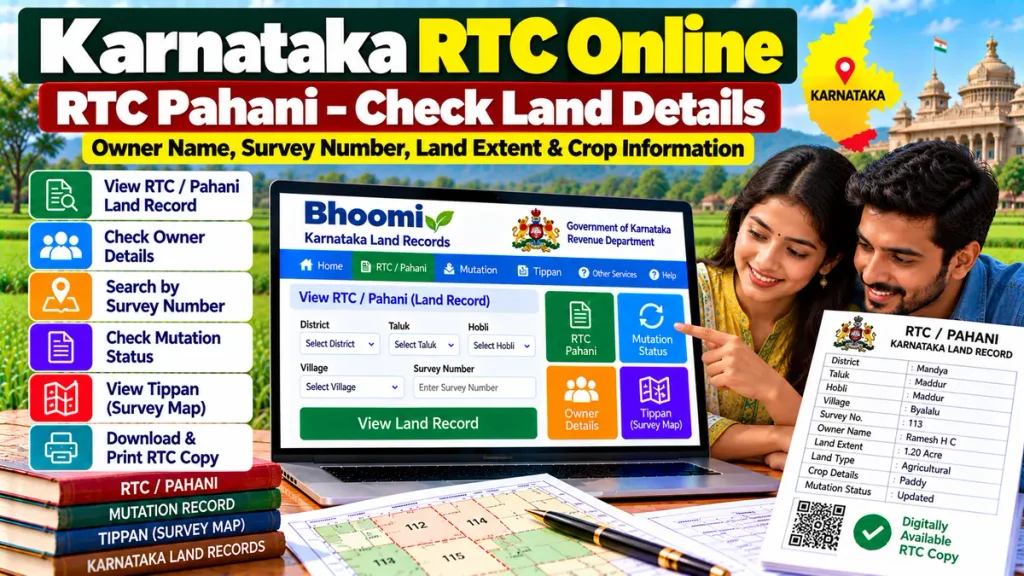
Karnataka RTC / Pahani – Overview
| Details | Information |
|---|---|
| Record | RTC / Pahani |
| Full Form | Record of Rights, Tenancy and Crops |
| Portal | Karnataka Bhoomi |
| Main Search Details | District, Taluk, Hobli, Village, Survey No. |
| Related Services | Mutation Extract, Mutation Status, Tippan |
| Useful For | Property verification, loans, land records |
| Department | Revenue Department, Karnataka |
| Property Type | Mainly agricultural / rural land |
What Is RTC or Pahani?
RTC stands for Record of Rights, Tenancy and Crops. In Karnataka, it is commonly called Pahani.
The RTC is an important rural revenue record used to identify information relating to a particular agricultural land parcel. Karnataka Government district portals confirm that Bhoomi digitized the earlier manual RTC records and made them available to citizens through computerized services.
What Details Can RTC Pahani Contain?
Depending on the record, an RTC/Pahani can help users review information such as:
- Survey number
- Landholder or owner details
- Land extent
- Tenancy-related information
- Agricultural or crop details
- Revenue information
- Changes connected with mutation
Because several people may have similar names, always identify the property primarily through the correct village, survey number and subdivision details.
How to Check Karnataka RTC Online
The official Karnataka Bhoomi land-record portal is linked by Karnataka Government district websites at landrecords.karnataka.gov.in.
To locate a land record, keep the following information ready:
District: Select the district where the land is situated.
Taluk: Choose the applicable Taluk.
Hobli: Select the relevant Hobli.
Village: Choose the revenue village.
Survey Number: Enter the exact parcel number.
Where applicable, you may also need the relevant Hissa or subdivision information.
After locating the RTC, compare its details with your registered property documents.
Can Original RTC Be Obtained Online?
Yes. Karnataka Government’s Mysuru district portal describes Pahani Online as a facility for obtaining the original Record of Rights over the internet. It currently states that an RTC can be obtained online on payment of the applicable fee.
Because fees and portal processes can change, users should check the current amount shown on the official Bhoomi service before making payment.
RTC and Mutation
RTC records are closely linked with mutation.
When ownership or another right changes due to an eligible transaction, the Bhoomi system updates land records through the mutation process under applicable Karnataka land-revenue rules.
Karnataka Government district information lists the following Bhoomi services:
- RTC
- Mutation Extract
- Mutation Status
- Tippan
Applicants who submit a mutation request through the applicable kiosk process receive an acknowledgement number that can be used to check mutation status.
Why Check RTC Before Buying Land?
Agricultural land can involve a major financial investment. Before paying an advance, compare the RTC with other property documents.
Check:
Owner Details: Do they correspond with the seller?
Survey Number: Does it match the registered deed?
Land Extent: Is the recorded area consistent?
Mutation: Are recent ownership changes updated?
Encumbrance: Check relevant registered transaction information.
Survey Records: Compare Tippan, atlas or other boundary records where necessary.
A Karnataka Government planning document specifically lists the latest RTC, latest mutation-register extract, latest Encumbrance Certificate and survey/atlas information among important land documents.
RTC Pahani and Agricultural Loans
RTC records are also important for agricultural finance because they contain land and cultivation-related information.
Depending on the bank and loan product, borrowers may be asked to provide documents such as:
- Latest RTC/Pahani
- Mutation record
- Registered title deed
- Encumbrance Certificate
- Survey details
- Other property documents
Therefore, keeping RTC and mutation information updated can help during agricultural loans, land loans, mortgage finance and property verification.
What Is Tippan?
Tippan is a survey-related document available through Bhoomi services. Karnataka Government district information lists Tippan along with RTC, Mutation Extract and Mutation Status.
It can be useful when reviewing survey boundaries or the layout of a particular land parcel.
For serious boundary disputes, an official survey may still be necessary.
Frequently Asked Questions
Can Karnataka RTC be checked online?
Yes. Karnataka’s Bhoomi system provides access to computerized RTC/Pahani records.
What does RTC stand for?
RTC means Record of Rights, Tenancy and Crops.
Is RTC also called Pahani?
Yes. In Karnataka, RTC is commonly referred to as Pahani.
Can mutation status be checked online?
Bhoomi services include Mutation Status and Mutation Extract.
Can I get RTC without visiting the Taluk office?
Karnataka Government information states that Pahani Online allows citizens to obtain RTC through the internet.
Is RTC enough before buying agricultural land?
No. Buyers should also verify the registered deed, mutation history, Encumbrance Certificate, survey records and physical boundaries.
Conclusion
Karnataka RTC Online / RTC Pahani makes it easier to review important rural land information such as owner details, survey number, land extent, crops and mutation-linked records. Before buying, selling, inheriting or financing agricultural land, comparing the latest RTC with mutation, registration, encumbrance and survey documents can provide stronger property verification.