Karnataka Old RTC / Old Pahani – Check Previous Land Records & Ownership History
Karnataka Old RTC / Old Pahani can be useful when a landowner, buyer or family member wants to check the historical record of agricultural land. Instead of looking only at the latest RTC, older Pahani records may help users understand previous ownership, survey and Hissa details, land extent, crop information and changes made through mutation.
Karnataka’s Bhoomi system digitized rural land records and provides access to RTC/Pahani, Mutation Extract, Mutation Status and other land-related information. Karnataka Government sources identify Bhoomi as the state’s computerized land-record management system.
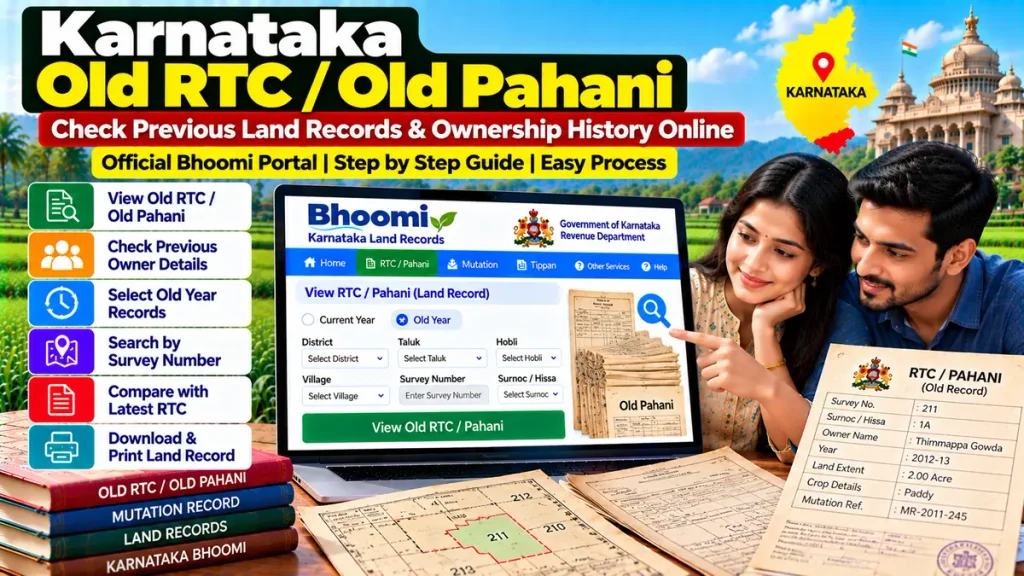
Karnataka Old RTC / Pahani – Overview
| Details | Information |
|---|---|
| Record | Old RTC / Old Pahani |
| Full Form | Record of Rights, Tenancy and Crops |
| Portal | Karnataka Bhoomi |
| Main Use | Historical land-record verification |
| Search Details | Survey No., Surnoc, Hissa |
| Related Record | Mutation Extract / MR |
| Useful For | Ownership history, disputes, property purchase |
| Land Type | Mainly rural / agricultural land |
What Is an Old RTC or Old Pahani?
RTC means Record of Rights, Tenancy and Crops, while Pahani is the commonly used name for the same rural land record in Karnataka.
The latest RTC reflects the current available revenue-record position. An old RTC can show how the record appeared during an earlier period.
This may be particularly useful for:
- Ancestral property
- Previous land purchases
- Inheritance verification
- Family partitions
- Old mutation checking
- Boundary disputes
- Property due diligence
Historical RTC records can help explain how the current owner or landholding details developed over time.
How to Check Karnataka Old RTC Online
The Bhoomi RTC service provides a Current Year / Old Year selection for available records. To locate an older RTC, users generally need to select the Old Year option and provide land information such as district, Taluk, Hobli, village and survey number. Available historical years depend on the records linked to that property.
Keep these details ready:
District: Where the property is located.
Taluk: Relevant Taluk.
Hobli: Select the applicable Hobli.
Village: Choose the correct revenue village.
Survey Number: Enter the parcel number.
Surnoc / Hissa: Select the subdivision details where applicable.
Year / Period: Choose the historical period available for that land.
Once the record appears, compare it with the latest RTC and registered property documents.
What Can an Old RTC Show?
An older Pahani may contain useful information relating to:
Previous Owner Details
It may help identify who was recorded against the property during an earlier period.
Survey and Hissa Number
These details help confirm that the historical RTC belongs to the exact parcel being investigated.
Land Extent
Compare previous and current land extent to identify possible subdivision, sale or survey changes.
Crop Information
Older RTCs can also contain agricultural or cultivation-related entries.
Mutation References
Historical RTC changes can often be better understood by checking the corresponding Mutation Register or MR entry.
Old RTC and Mutation History
When ownership or other rights change, the related RTC information is updated through the mutation process.
For this reason, an old RTC should ideally be checked together with the Mutation Extract / MR.
For example, if an old RTC shows one owner and a newer RTC shows another, the Mutation Extract may help explain whether the change resulted from:
- Sale
- Inheritance
- Partition
- Gift or transfer
- Revenue order
- Other eligible changes
Karnataka Government property-document requirements also recognize the importance of checking the latest RTC together with the Mutation Register Extract and other supporting property records.
Why Check Old RTC Before Buying Land?
Historical land records can reveal issues that may not be obvious from only the current Pahani.
Before purchasing inherited or repeatedly transferred land, compare:
- Current RTC/Pahani
- Available old RTC records
- Mutation Extract / MR
- Survey and Hissa number
- Registered sale deeds
- Encumbrance Certificate
- Survey map or Tippan
- Physical boundaries
This can help establish a clearer property ownership history before a major financial transaction.
Old RTC and Ancestral Property
Old Pahani records can be especially useful for ancestral land.
Suppose the current RTC contains the names of several legal heirs. An older RTC may show the previous family member under whom the property was recorded before inheritance or partition.
However, an old RTC alone should not be treated as complete proof of inheritance. Family documents, registered deeds, mutation records and applicable legal documents should also be checked.
Old RTC and Property Loans
Historical land records may also become relevant during:
- Agricultural loans
- Land-backed loans
- Mortgage finance
- Property legal verification
- Ownership-chain review
- Disputed property cases
Banks and lawyers may request additional historical documents when the current ownership chain requires clarification.
What If an Old RTC Is Not Available Online?
Not every historical period may be available digitally for every survey number.
The years displayed through the Old Year search depend on the records available for the selected parcel.
If the required record is not available online, you may need to check with the appropriate Taluk revenue office or Bhoomi service centre for the availability of older records.
Frequently Asked Questions
Can Karnataka old RTC be checked online?
Yes. The Bhoomi RTC interface supports an Old Year option for available historical RTC/Pahani records.
What details are needed?
Usually district, Taluk, Hobli, village, survey number, Surnoc/Hissa and the available record year are required.
Can old RTC show previous owners?
Historical RTCs may show the landholder information recorded for that earlier period.
Should I also check Mutation Extract?
Yes. MR can help explain ownership changes between an old RTC and the latest RTC.
Can I select any previous year?
Not necessarily. Historical years available for selection depend on the records available for that particular land parcel.
Is old RTC enough to prove ownership?
No. Verify it together with registered deeds, mutation history, Encumbrance Certificate and other relevant legal documents.
Conclusion
Karnataka Old RTC / Old Pahani can provide valuable information about the historical record of agricultural land. By comparing previous RTCs, current Pahani, Mutation Extract, survey/Hissa details, registered deeds and encumbrance information, buyers and landowners can better understand the ownership history of a property before purchase, inheritance settlement, loan processing or legal verification.