Best Hair Treatment for Your Hair Type – Get Personalized Hair Care Ideas
Finding the best hair treatment can be confusing because every person’s hair is different. A product or routine that works well for straight and oily hair may not provide the same results for dry, curly, wavy, fine, or chemically treated hair. Instead of following a single routine for everyone, it can be more useful to understand your individual hair characteristics and build a personalized hair care routine around them.
Modern hair care has also become more personalized with the growth of AI hair analysis, virtual hairstyle apps, hair makeover tools, and personalized hair care platforms. These tools can help users explore their visible hair characteristics, discover suitable hairstyle ideas, experiment with hair colors, and organize general hair care suggestions.
However, technology is only a starting point. Understanding your hair texture, scalp condition, styling habits, and everyday routine remains important.
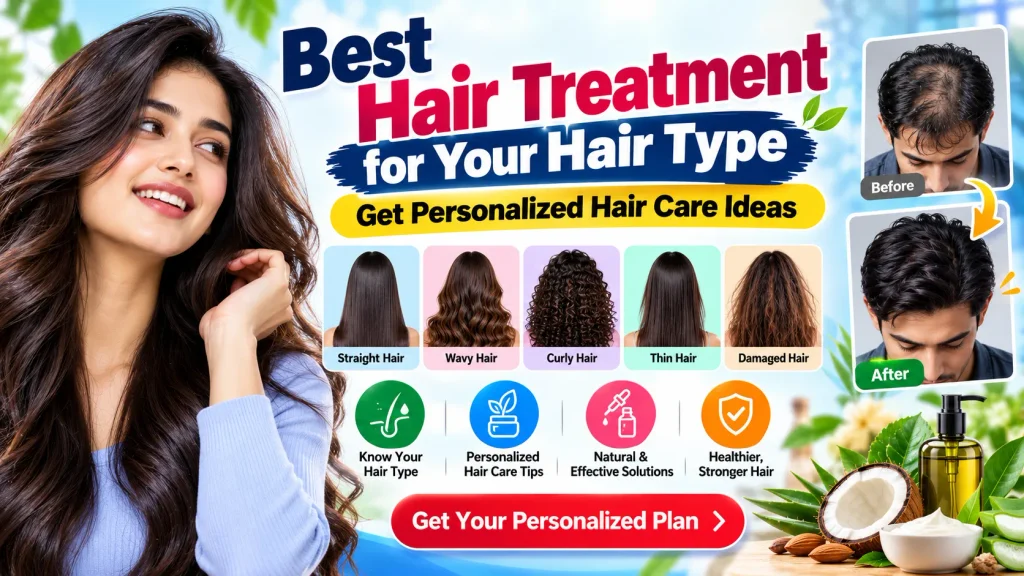
This guide explains how to identify your hair type, explore suitable hair treatments, build a personalized routine, and use AI-powered tools to discover new hair care and hairstyle ideas.
Why Your Hair Type Matters
Hair can differ in texture, thickness, oil production, curl pattern, density, and overall condition. These differences affect how hair responds to cleansing, conditioning, styling, heat, humidity, and chemical treatments.
For example, fine straight hair may become weighed down by heavy styling products, while thick curly hair may benefit from additional moisture and conditioning.
Your scalp can also have different needs from your hair lengths. Someone may have an oily scalp but dry ends, particularly if the hair is long, colored, or frequently heat styled.
Therefore, the best hair treatment for your hair type starts with understanding what your hair actually needs rather than simply buying popular products.
Hair Types and General Treatment Ideas
The following table provides a quick overview of common hair types and general care approaches.
| Hair Type | Common Characteristics | Hair Care Ideas | Styling Considerations |
|---|---|---|---|
| Straight Hair | Smooth, may become oily quickly | Lightweight shampoo and conditioner | Avoid excessive heavy products |
| Wavy Hair | Loose S-shaped pattern | Light moisture and frizz control | Enhance natural waves |
| Curly Hair | Defined curls, often prone to dryness | Moisturizing conditioner and gentle care | Reduce excessive brushing |
| Coily Hair | Tight curls or coils | Moisture-focused care and gentle handling | Minimize unnecessary manipulation |
| Fine Hair | Thin individual strands | Lightweight products | Avoid heavy oils and creams |
| Thick Hair | Fuller and heavier | Conditioning and smoothing care | Section hair when styling |
| Dry Hair | Rough, dull or frizzy appearance | Moisturizing and conditioning products | Limit excessive heat |
| Oily Hair | Greasy roots or scalp | Appropriate regular cleansing | Avoid heavy scalp products |
| Color-Treated Hair | Chemically processed | Gentle cleansing and conditioning | Reduce additional chemical stress |
This table provides general guidance. Your actual routine may need to combine several categories. For instance, your hair could be fine, wavy, color-treated, and oily at the roots simultaneously.
Best Hair Treatment for Straight Hair
Straight hair often allows natural scalp oils to move relatively easily along the hair shaft. As a result, some people with straight hair notice that their roots become oily quickly.
A lightweight routine may work better than applying multiple heavy products.
Choose shampoo based primarily on your scalp needs and use conditioner according to the condition of your lengths and ends. If your roots become oily easily, you may prefer applying conditioner mainly away from the scalp.
Avoid using too many oils, creams, serums, or styling products at once, particularly if your hair is fine.
For volume, experiment with lightweight styling products and hairstyles that create movement without requiring excessive heat.
Best Hair Treatment for Wavy Hair
Wavy hair falls between straight and curly textures. Its pattern can range from subtle waves to more defined S-shaped sections.
One common challenge is finding the right balance between moisture and volume. Heavy products may flatten waves, while insufficient conditioning can contribute to frizz.
A gentle shampoo followed by an appropriate conditioner can provide a simple foundation.
After washing, avoid aggressively rubbing your hair with a towel. Instead, gently remove excess water.
Lightweight leave-in products, mousses, or styling products designed for waves may help define the natural pattern.
If you frequently straighten your wavy hair, consider reducing unnecessary high-temperature styling to minimize cosmetic damage.
Best Hair Treatment for Curly Hair
Curly hair often requires more attention to moisture and handling because natural oils may not travel along the curved hair shaft as easily as they do with straight hair.
A moisturizing conditioner can be particularly useful for improving manageability.
Detangling gently is also important. Some people with curly hair prefer detangling while the hair is damp and conditioned rather than brushing completely dry curls.
Leave-in conditioners and curl-focused styling products can help support curl definition and reduce the appearance of frizz.
Heat styling should be used carefully. If you use a diffuser, straightener, or curling tool, avoid unnecessarily high temperatures and consider an appropriate heat-protection product.
Best Hair Treatment for Coily Hair
Coily hair can have tight curls, spirals, or zigzag patterns and may be particularly vulnerable to dryness and breakage from excessive manipulation.
Moisture-focused routines are commonly preferred.
Conditioning, careful detangling, and reducing unnecessary pulling can help maintain manageability.
Protective styling may also reduce everyday manipulation when used appropriately. However, hairstyles that create excessive tension on the scalp should be avoided.
When detangling, work gradually rather than aggressively pulling through knots.
The ideal routine depends on your individual curl pattern, hair density, strand thickness, and scalp condition.
Hair Treatment for Dry Hair
Dry hair can appear dull, rough, frizzy, or difficult to manage. Several factors can contribute, including frequent heat styling, chemical processing, environmental exposure, and unsuitable hair care practices.
Start by reviewing your current routine.
Frequent exposure to high temperatures from straighteners, curling tools, and hair dryers can contribute to cosmetic damage. Reduce excessive heat when possible.
Condition your hair regularly and concentrate products on areas that feel particularly dry.
A leave-in conditioner or suitable moisturizing product may provide additional manageability.
If you color or chemically process your hair frequently, consider spacing out intensive treatments and discussing the condition of your hair with an experienced stylist.
Hair Treatment for Oily Hair
An oily scalp is common and is influenced by natural sebum production, hair characteristics, activity levels, and product use.
The goal is not necessarily to remove every trace of natural oil but to maintain a comfortable, clean scalp.
Wash according to your scalp’s needs using an appropriate shampoo.
Avoid repeatedly applying heavy oils or styling products directly to the scalp if they contribute to buildup or make the hair feel greasy.
If your ends are dry, you can still use conditioner on the mid-lengths and ends.
There is no single ideal washing schedule for everyone. Some people need more frequent cleansing than others.
Hair Treatment for Fine Hair
Fine hair refers to the diameter of individual hair strands rather than the total amount of hair on your head.
Fine hair may become flat or weighed down relatively easily.
Lightweight shampoo, conditioner, and styling products are often practical choices. Apply richer products carefully and monitor how your hair responds.
For additional volume, you can experiment with layered hairstyles, shorter cuts, or lightweight volumizing products.
Virtual hairstyle tools can also help you preview different cuts before visiting a salon.
Hair Treatment for Thick Hair
Thick hair may require additional time for washing, drying, detangling, and styling.
Conditioning can make it easier to manage, particularly if the hair is also dry, wavy, curly, or long.
When detangling thick hair, dividing it into smaller sections can make the process easier.
Similarly, applying styling products in sections may provide more even distribution.
A layered haircut can sometimes reduce the visual heaviness of very dense hair while adding movement, although the ideal cut depends on your texture and styling preferences.
Hair Treatment for Frizzy Hair
Frizz can occur across many different hair types and is often influenced by hair condition, humidity, styling methods, and natural texture.
Start by treating your hair gently.
Avoid rough towel drying and unnecessary brushing that disrupts the natural pattern. Appropriate conditioning can improve softness and manageability.
For some hair types, leave-in conditioners, creams, or anti-frizz styling products may be useful.
If heat styling is a regular part of your routine, use it carefully and avoid relying on very high temperatures simply to control frizz.
Hair Treatment for Color-Treated Hair
Hair coloring can provide a dramatic makeover, but permanent coloring and bleaching involve chemical processes that can affect the condition of the hair.
After coloring, choose a routine suitable for chemically treated hair.
Regular conditioning may help maintain softness and manageability. Reducing repeated high-temperature styling can also limit additional cosmetic stress.
If you are considering another major color change, particularly bleaching previously processed hair, consult an experienced hair professional.
A virtual hair color try-on tool can be useful before coloring because it lets you preview different shades without immediately applying chemicals.
How to Create a Personalized Hair Care Routine
Personalized hair care does not necessarily require dozens of products. A simple routine based on your individual needs can be easier to maintain.
Step 1: Identify Your Hair Texture
Determine whether your natural pattern is primarily straight, wavy, curly, or coily.
Step 2: Check Your Scalp
Consider whether your scalp usually feels oily, balanced, dry, or uncomfortable.
Step 3: Identify Your Main Hair Concern
Your primary concern might be dryness, frizz, low volume, tangling, breakage from styling, or maintaining chemically treated hair.
Step 4: Choose Basic Products
Start with shampoo and conditioner suited to your needs. Add additional products only when they serve a clear purpose.
Step 5: Review Your Styling Habits
Consider how often you use straighteners, curling tools, blow dryers, chemical treatments, tight hairstyles, or other potentially stressful styling methods.
Step 6: Adjust When Necessary
Your hair may change with seasons, length, coloring, lifestyle, and styling habits. A routine that works today may need adjustment later.
Use AI to Get Personalized Hair Care Ideas
AI-powered hair tools are increasingly being used to provide more personalized experiences.
Depending on the platform, you may upload a photo and allow the software to analyze visible features such as hair texture, length, volume, and face shape.
An AI tool might then provide general hair care suggestions or recommend hairstyles to explore.
For example, someone with visible waves may receive ideas for enhancing natural texture, while someone considering a haircut may be shown multiple virtual styles.
However, AI hair analysis has limitations. A photograph cannot provide a complete understanding of your scalp or determine the medical cause of hair changes.
Use AI primarily for general hair care ideas, hairstyle inspiration, and virtual experimentation.
Find the Right Hairstyle for Your Hair Type
Hair treatment and hairstyle selection often work together.
Choosing a style that complements your natural texture can reduce the amount of daily styling required.
People with wavy or curly hair, for example, can explore layered styles that highlight their natural texture. Fine hair can be virtually tested with shorter or layered cuts to see which creates the preferred appearance.
AI hairstyle apps allow you to preview options including:
Short hairstyles, long hairstyles, layered cuts, bobs, bangs, curls, waves, and different hair colors.
Trying these virtually can help you communicate your preferences more clearly when visiting a hairstylist.
Hair Care Mistakes to Avoid
Even a good hair treatment routine may be less effective if everyday habits are causing unnecessary damage.
Try to avoid excessive heat styling, aggressive detangling, repeatedly pulling hair into very tight hairstyles, and combining multiple chemical treatments without considering the condition of your hair.
Using more product does not automatically produce better results either. Product buildup can leave some hair types feeling heavy or greasy.
Most importantly, avoid assuming that every hair problem can be solved with a cosmetic product.
When Should You See a Dermatologist?
Personalized hair care apps and cosmetic treatments can help with everyday styling and appearance, but they cannot replace medical evaluation.
Consider consulting a qualified dermatologist or healthcare professional if you experience sudden or significant hair loss, bald patches, persistent scalp itching, pain, redness, sores, scaling, or other unusual symptoms.
Hair loss can have many possible causes, and identifying the cause is important before deciding on treatment.
AI-generated recommendations should therefore not be used to diagnose a medical condition.
Final Thoughts
Finding the best hair treatment for your hair type begins with understanding your natural texture, scalp condition, current hair condition, and styling habits.
Straight and fine hair may benefit from lightweight products, while curly and coily hair often needs additional attention to conditioning and gentle handling. Dry, frizzy, colored, or chemically treated hair may require adjustments to reduce unnecessary stress and improve manageability.
AI hair analysis and virtual hairstyle tools can make personalized hair care more interactive by helping you explore hairstyles, hair colors, and general care ideas based on visible characteristics.
Use these tools as a source of inspiration rather than a medical diagnosis.
A consistent, manageable routine combined with gentle styling habits and professional guidance when necessary can help you make more informed decisions about your hair care and appearance.
Frequently Asked Questions (FAQ)
1. How do I find the best hair treatment for my hair type?
Start by identifying your natural hair texture, scalp condition, strand characteristics, and main concerns. Choose cleansing, conditioning, and styling products according to those needs rather than following a single routine designed for everyone.
2. What is the best treatment for dry hair?
Dry hair may benefit from regular conditioning, gentle handling, reduced excessive heat styling, and suitable moisturizing products. The exact routine depends on your hair texture and the cause of the dryness.
3. What is the best hair care routine for curly hair?
A general curly-hair routine can include appropriate cleansing, moisturizing conditioner, gentle detangling, and curl-friendly styling products. Avoid excessive brushing and unnecessary high-temperature styling.
4. How should I care for oily hair?
Cleanse according to your scalp’s needs and avoid excessive heavy product buildup. If the ends are dry, apply conditioner mainly to the mid-lengths and ends.
5. Can AI identify my hair type?
Some AI hair analysis tools can estimate visible characteristics such as texture, curl pattern, length, and volume from a photograph. Results can vary depending on the image and technology used.
6. Can AI recommend personalized hair treatments?
AI tools may provide general personalized hair care ideas based on visible characteristics and information you provide. They should not be treated as a medical diagnosis or personalized medical treatment.
7. Can I find hairstyles based on my hair type?
Yes. Virtual hairstyle tools can help you preview different haircuts and styles on your photo, making it easier to explore options suited to your natural texture and preferences.
8. How can I care for color-treated hair?
Use gentle hair care products, condition regularly, limit unnecessary heat, and avoid excessive chemical processing. For major chemical changes, consider consulting an experienced stylist.
9. Can hair treatment completely stop hair loss?
Hair loss can have many causes, and cosmetic hair treatments cannot address every cause. Sudden, persistent, or significant hair loss should be evaluated by a qualified dermatologist or healthcare professional.
10. Is personalized hair care better than using the same routine for everyone?
Personalized care considers differences in hair texture, scalp condition, styling habits, and individual concerns. This can make it easier to choose products and routines that are more appropriate for your specific hair characteristics.
Disclaimer: This article is intended for general informational and educational purposes only. Hair care products, AI hair analysis, and virtual hairstyle tools should not be considered substitutes for professional medical diagnosis or treatment. If you experience persistent hair loss, scalp irritation, bald patches, or other concerning symptoms, consult a qualified dermatologist or healthcare professional.