Old VF6 Entry Gujarat – Check Previous Mutation Records & Ownership Changes
Old VF6 Entry Gujarat can be very useful when you need to trace the history of a rural property and understand how ownership or other land rights changed over time. Village Form No. 6 (VF6) is closely linked with mutation records, so older VF6 entries may help reveal previous sales, inheritance changes, partitions, transfers and disputed mutations connected with a survey number.
Gujarat’s e-Dhara system was created to digitize village land records and handle mutation-related activities along with Records of Rights such as VF6, 7/12 and 8A.
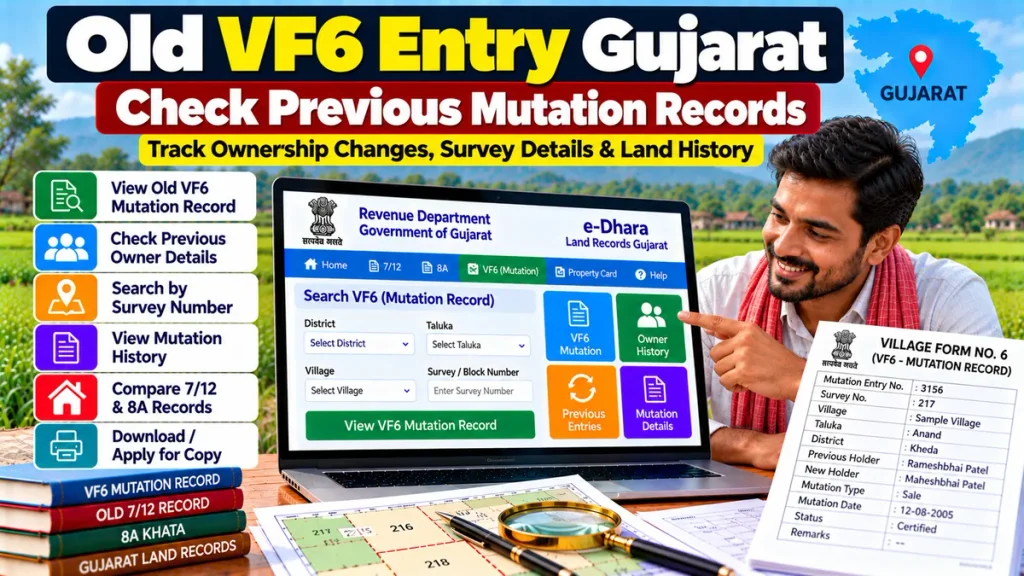
Old VF6 Entry Gujarat – Overview
| Details | Information |
|---|---|
| Record | Village Form No. 6 |
| Common Name | VF6 / Mutation Record |
| Main Purpose | Track changes in land rights |
| Useful For | Previous ownership verification |
| Related Records | 7/12 and 8A |
| Search Details | Survey No., Khata, Khatedar |
| System | e-Dhara |
| Historical Use | Mutation and dispute history |
What Is VF6 in Gujarat?
Village Form No. 6 is associated with mutation entries affecting rural land.
The Gujarat Collector Manual explains that changes made after preparation of the Record of Rights are called mutations, and the land-record system maintains a mutation register showing details such as the type of right and the survey or subdivision affected.
A mutation may arise after:
- Sale of land
- Inheritance
- Partition
- Gift
- Transfer of rights
- Mortgage-related changes
- Other eligible land-right events
Why Check an Old VF6 Entry?
The latest 7/12 may show only the current recorded position of a property.
An older VF6 entry can help explain how the current record was created.
For example, it may help identify:
Previous Holder: Person whose rights were affected before a later transfer.
Mutation Type: Whether the change related to sale, inheritance, partition or another event.
Survey Number: Parcel affected by the mutation.
Entry Sequence: Older entries can help establish the timeline of property changes.
Dispute History: Some mutation entries may have been challenged before being finalized.
This is particularly useful for ancestral or repeatedly transferred property.
How to Search Old VF6 Records
Gujarat’s e-Dhara system supports computerized land-record searches using information such as:
- Khatedar name
- Khata number
- Survey number
- Farm name
- Mutation application information
- Mutation entry status
For an old VF6 record, keep these details ready:
District: Where the land is located.
Taluka: Relevant Taluka.
Village: Revenue village.
Survey / Block Number: Parcel reference.
Old Holder Name: Helpful when researching ownership history.
Mutation Entry Number: Very useful if already known.
Availability of a specific historical entry may depend on whether that record has been digitized. If a very old entry is not available through the current digital system, the concerned e-Dhara Kendra or Taluka revenue office may need to be consulted.
Old VF6 and 7/12 History
VF6 and 7/12 should often be checked together.
VF6 explains the change in rights, while the connected 7/12 reflects the land record after applicable changes are incorporated.
This means that if an old 7/12 suddenly shows a different holder, the corresponding VF6 mutation entry may help explain why the change occurred.
When researching land history, compare:
- Old VF6 mutation entry
- Old 7/12
- Current 7/12
- 8A Khata
- Registered deeds
- Survey number
- Land area
Old VF6 and Disputed Mutations
Historical mutation entries are especially important if there was ever a dispute.
The Gujarat Collector Manual includes a separate Register of Disputed Cases containing fields for the related mutation entry, survey or hissa number, objection date, dispute details and orders passed by the Mamlatdar or Collector.
This means an old mutation should not automatically be treated as straightforward simply because an entry exists.
If an older transaction appears questionable, compare the mutation with the final order and registered property documents.
Why Check Old VF6 Before Buying Land?
Historical property verification can reveal issues that are not obvious from only the latest record.
Before purchasing rural land, especially inherited or old property, check:
- Current 7/12
- Old 7/12 where available
- Relevant old VF6 entries
- Current 8A Khata
- Registered sale deeds
- Survey / block number
- Land area and boundaries
- Any disputed mutation history
This can help identify whether the seller’s recorded rights developed through a clear chain of mutations.
Old VF6 and Property Loans
Historical mutation records may also become relevant during:
- Agricultural loans
- Mortgage finance
- Land-backed loans
- Legal due diligence
- Inheritance settlements
- Property litigation
Banks or legal professionals may request older records when the current ownership chain requires clarification.
Gujarat’s e-Dhara system was specifically designed to make village land records easier to access, update and validate, and it is also used in land-related litigation and administrative verification.
Can Digitally Signed Village Records Be Requested?
The Gujarat Revenue Department currently lists an iORA service for obtaining digitally signed village forms, which can be useful when an official land-record copy is required for documentation.
The exact historical record available through a particular service can depend on the village, record type and digitization status.
Frequently Asked Questions
What is an old VF6 entry in Gujarat?
It is a previous mutation entry showing an earlier change affecting rights over rural land.
Can VF6 be searched using survey number?
Gujarat’s e-Dhara system supports searches using survey number and other land-record details.
Can VF6 show previous ownership changes?
It can help trace mutations that changed recorded rights, such as sale, inheritance or partition.
What if an old VF6 entry was disputed?
Check the related disputed-case record and final revenue order where available. Gujarat’s official land-record framework maintains a separate disputed-cases register.
Is old VF6 enough to prove ownership?
No. Compare it with registered deeds, 7/12, 8A and other relevant legal and revenue documents.
What if the old mutation entry is not online?
Availability depends on digitization. Older records may need to be checked through the appropriate e-Dhara Kendra or revenue office.
Conclusion
Old VF6 Entry Gujarat can help reconstruct the mutation and ownership history of rural land. By comparing previous VF6 entries with old and current 7/12 records, 8A Khata, survey numbers and registered deeds, landowners and buyers can perform stronger historical property verification before dealing with ancestral, disputed or high-value land.