Old 7/12 Land Record Gujarat – Check Previous Land Records, Survey & Ownership Details
Old 7/12 Land Record Gujarat can be useful when a landowner, buyer or family member needs to verify the previous history of agricultural or rural land. Older land records may help trace past landholders, survey numbers, mutation entries, land area and changes in rights that occurred before the latest computerized Record of Rights was prepared.
Gujarat’s e-Dhara project was created to convert physical village land records into electronic records and provide computerized copies of Records of Rights such as 7/12, VF6 and 8A.
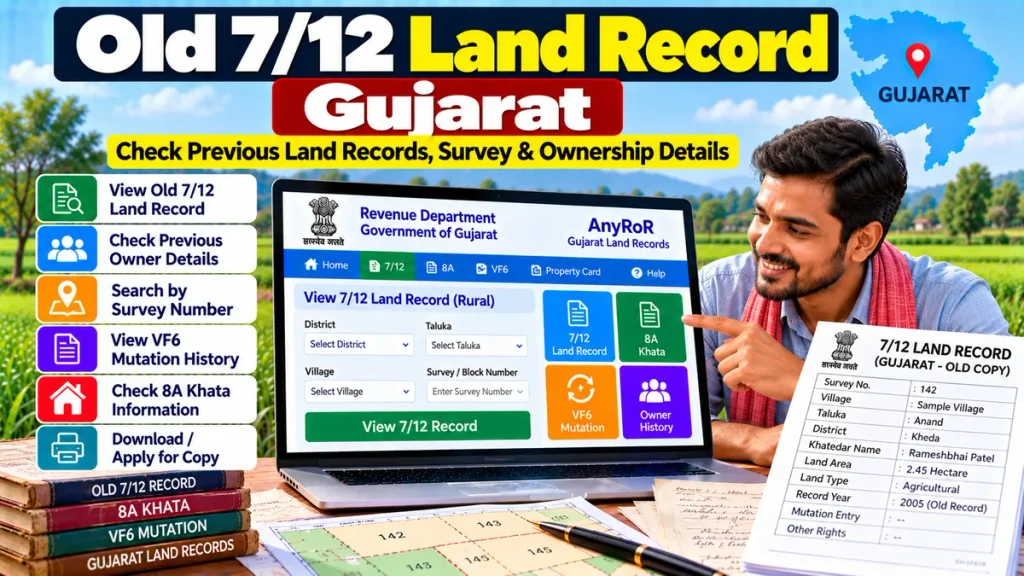
Old Gujarat 7/12 Record – Overview
| Details | Information |
|---|---|
| Record | Old 7/12 Land Record |
| Property Type | Rural / Agricultural Land |
| Main Identifier | Survey / Block Number |
| Related Records | VF6 Mutation, 8A Khata |
| Useful For | Ownership History & Verification |
| Digital System | e-Dhara |
| Search Details | Survey No., Khata, Khatedar |
| Older Records | Availability may depend on record and period |
What Is an Old 7/12 Land Record?
A 7/12 record contains important rural land information associated with a particular survey number.
An older 7/12 can be useful when you want to understand how the land record looked before later mutations or ownership changes were incorporated.
Historical records may become relevant in cases involving:
- Ancestral property
- Old sale transactions
- Inheritance disputes
- Boundary disputes
- Mutation verification
- Agricultural land purchases
- Legal due diligence
Gujarat’s official Collector Manual explains that Village Form No. 7 is periodically rewritten and incorporates newly acquired rights while removing rights that have been extinguished through mutation records.
How to Check Old Gujarat Land Records
The Gujarat Revenue Department currently provides an official online facility for viewing rural Records of Rights.
For current computerized records, users generally need details such as:
District: District where the land is located.
Taluka: Relevant Taluka.
Village: Revenue village.
Survey / Block Number: Parcel identification number.
Khata or Khatedar Details: Helpful for identifying the correct landholding.
The e-Dhara system supports searches using Khatedar name, Khata number, survey number and other land information.
For a much older historical copy that is not available through the current online record, users may need to check availability through the concerned e-Dhara Kendra, Taluka revenue office or village land-record authority.
Why VF6 Is Important for Old Land Records
When researching old ownership, checking only the latest 7/12 may not provide the complete picture.
Village Form No. 6 or VF6 is the mutation register used to record changes in land rights.
The Gujarat Collector Manual explains that newly acquired rights are recorded in the mutation register and later incorporated into Village Form 7 after the mutation process is completed.
VF6 can therefore help identify changes caused by:
- Sale
- Inheritance
- Partition
- Gift
- Transfer
- Other changes in land rights
Old 7/12 vs Current 7/12
The current 7/12 generally reflects the latest available computerized land information.
An older 7/12 may show the landholding as it existed before subsequent changes.
For example, if land was inherited from a grandfather and later divided among heirs, older records may show the earlier holder, while current records may show the names entered after mutation.
This makes historical records valuable when establishing the sequence of changes affecting a property.
What Details Should You Compare?
When examining old and current land records, compare:
Survey Number: Check whether the parcel reference remains consistent.
Khatedar Name: See how the recorded holder changed over time.
Land Area: Check for subdivision, sale or measurement changes.
VF6 Entry: Identify the mutation responsible for a change.
8A Khata: Review holding-level information.
Registered Deeds: Compare revenue records with legal transaction documents.
Why Check Old 7/12 Before Buying Land?
Historical verification can be especially useful for inherited or repeatedly transferred land.
Before purchasing such property, check:
- Current 7/12
- Relevant older land records
- VF6 mutation history
- 8A Khata
- Survey / block number
- Registered sale deeds
- Seller’s recorded rights
- Physical land boundaries
This can help reveal older ownership changes or discrepancies that may not be obvious from only the latest land record.
Old Records and Property Disputes
Old land records may also become important in disputes involving ownership, inheritance or boundaries.
Gujarat’s e-Dhara project notes that computerized land records have also assisted in land-related litigation cases and validation of land information.
However, an old 7/12 record should not automatically be treated as conclusive proof of legal title. Registered deeds, mutation orders, court orders and other documents may also need to be examined.
Frequently Asked Questions
Can old Gujarat 7/12 records be checked online?
Current rural Records of Rights can be viewed through Gujarat’s official land-record services. Availability of a particular historical record can depend on how old the record is and whether it has been digitized.
Can I search land records by survey number?
Yes. Gujarat’s e-Dhara system supports searches by survey number.
How can I check previous ownership?
Review older land records together with VF6 mutation entries, 8A Khata and registered deeds.
Why is VF6 important?
VF6 records mutations and changes in land rights before those changes are incorporated into connected Records of Rights.
What if an old record is not available online?
You may need to check its availability with the concerned e-Dhara Kendra or revenue office.
Is an old 7/12 enough to prove ownership?
No. It is an important revenue record, but legal ownership verification should also include registered title documents and relevant mutation records.
Conclusion
Old 7/12 Land Record Gujarat can help landowners and buyers understand the historical record of rural property. By comparing previous 7/12 entries with VF6 mutation history, 8A Khata, survey numbers, registered deeds and current land records, users can perform stronger property verification before dealing with inherited, disputed or high-value land.