Best Car Insurance Plans – Compare Coverage, Premium and Benefits
Choosing the best car insurance plan is not simply about finding the lowest premium. A suitable policy should provide the right balance of coverage, price, claim support, deductibles, Insured Declared Value (IDV), useful add-ons, and other benefits based on your vehicle and driving requirements.
With multiple insurers and policy options available in India, car owners can now compare car insurance plans online before purchasing or renewing a policy. This makes it easier to understand the difference between third-party insurance, comprehensive insurance, and standalone own-damage coverage.
However, there is no single car insurance plan that can be considered the “best” for every vehicle owner. A policy that works well for a new car may not be suitable for an older vehicle. Similarly, someone who drives every day may need different protection from a person who uses a car only occasionally.
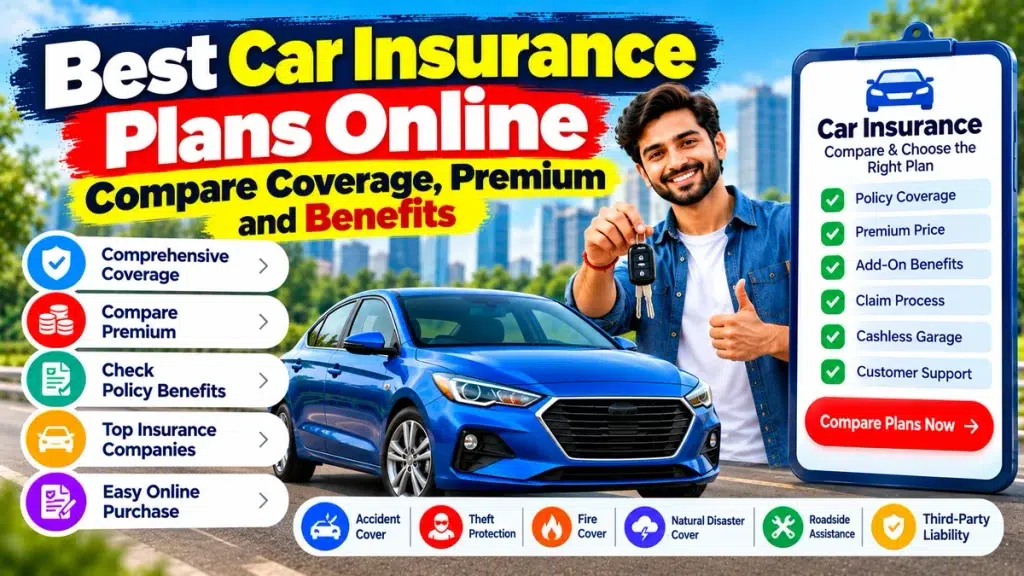
This guide explains how to compare car insurance coverage, premiums and policy benefits, what features to check, and how to select a plan that matches your requirements.
What Is Car Insurance?
Car insurance is an agreement between a vehicle owner and an insurance provider. The policyholder pays a premium, and the insurance company provides financial protection against specified risks according to the policy’s terms and conditions.
Depending on the type of policy, car insurance may provide protection against third-party liabilities as well as eligible losses involving your own vehicle.
These may include accidents, theft, fire, floods, storms and certain other insured events.
Coverage differs between policies. Therefore, always read the policy wording, exclusions, deductibles and limits before purchasing insurance.
Types of Car Insurance Plans
Before comparing policies, it is important to understand the major types of car insurance available.
1. Third-Party Car Insurance
Third-party car insurance primarily provides protection against legal liabilities arising from third-party injury, death or property damage, subject to applicable laws and policy terms.
For vehicles used on public roads in India, third-party motor insurance is generally mandatory under applicable motor vehicle laws.
However, a basic third-party policy does not normally pay for accidental damage to your own car.
This makes it different from comprehensive insurance.
2. Comprehensive Car Insurance
A comprehensive car insurance policy provides broader protection.
In addition to applicable third-party liability coverage, it can provide protection against eligible damage to your insured vehicle caused by events such as:
- Road accidents
- Theft
- Fire
- Flood
- Cyclone or storm
- Earthquake
- Certain natural disasters
- Specified man-made events
Optional add-on covers may also be available with comprehensive insurance.
3. Standalone Own-Damage Insurance
Standalone own-damage insurance primarily protects the insured vehicle against eligible losses.
It can be useful when the vehicle already has an applicable third-party insurance policy but the owner wants additional protection for the car itself.
Coverage can include accidental damage, theft, fire and specified natural or man-made events, depending on policy terms.
Car Insurance Plans Comparison
| Feature | Third-Party | Comprehensive | Standalone Own Damage |
|---|---|---|---|
| Third-Party Liability | Yes | Generally Included/Applicable | No |
| Own Car Accident Damage | No | Yes* | Yes* |
| Theft Protection | No | Yes* | Yes* |
| Fire Damage | No | Yes* | Yes* |
| Natural Disaster Cover | No | Yes* | Yes* |
| Add-On Options | Limited | Usually Available | Usually Available |
| Own Vehicle Protection | No | Yes | Yes |
| Premium Level | Usually Lower | Usually Higher | Depends on Coverage |
| Suitable For | Basic legal requirement | Broader protection | Own-damage protection |
*Subject to policy terms, exclusions, deductibles and applicable limits.
How to Choose the Best Car Insurance Plan
The best policy for you depends on your individual requirements.
Instead of comparing only premiums, consider several factors together.
Coverage
Start by checking exactly what the policy covers.
If you only purchase third-party insurance, your own vehicle damage will generally not be covered.
For broader protection, consider comprehensive or eligible own-damage insurance.
Premium
The premium is the amount paid for insurance coverage.
A low premium may appear attractive, but the cheapest policy is not automatically the most suitable.
Always compare similar levels of coverage when comparing premiums.
Insured Declared Value
Insured Declared Value (IDV) broadly represents the insured value of the vehicle for certain types of claims, such as theft or total loss, subject to policy terms.
IDV can affect both premium and claim settlement.
A lower IDV may reduce the own-damage premium but may also reduce the amount considered in an eligible total-loss or theft claim.
Deductibles
A deductible is an amount the policyholder may need to bear during an eligible claim.
Policies can include compulsory deductibles and, where selected, voluntary deductibles.
Choosing a higher voluntary deductible may reduce the premium, but it can increase your out-of-pocket expense during a claim.
Claim Process
Check how the insurer handles claims.
Look for information about online claim registration, survey procedures, cashless repair options, document requirements and claim tracking.
An easy-to-understand claim process can be valuable when an accident actually occurs.
Cashless Garage Network
Many insurers have arrangements with selected garages where eligible cashless repairs can be performed.
A larger network is useful only if suitable garages are conveniently located where you live or regularly drive.
Therefore, check nearby network garages rather than relying only on the total number advertised by an insurer.
What Determines Car Insurance Premium?
Car insurance premiums vary between vehicles and policyholders.
Several factors can affect the final price.
Make and Model of the Vehicle
The manufacturer’s brand, model, variant, engine specifications, repair costs and value of the vehicle can influence the premium.
Vehicle Age
As a car gets older, its market-related insured value generally changes. This can affect the own-damage component of the premium.
Registration Location
Insurance pricing can vary according to the vehicle’s registration location and applicable rating factors.
Policy Type
Third-party insurance generally has a different pricing structure from comprehensive insurance.
A comprehensive policy normally costs more because it provides broader coverage.
IDV
The selected or applicable IDV can influence the own-damage premium.
Add-On Covers
Optional add-ons provide additional protection but also increase the total premium.
Claim History
Your previous claim history may affect renewal pricing and eligibility for a No Claim Bonus.
What Is No Claim Bonus?
No Claim Bonus (NCB) is a discount that may be available on the own-damage premium when an eligible policyholder has not made a claim during the previous policy period.
The discount can increase over consecutive claim-free periods, subject to applicable rules and maximum limits.
NCB can help reduce renewal costs.
When switching insurers, eligible NCB may generally be transferred, subject to verification and documentation.
Always provide accurate information regarding previous claims and NCB eligibility.
Popular Car Insurance Add-On Covers
Add-ons allow you to customize eligible comprehensive or own-damage insurance.
Not every add-on is necessary for every vehicle.
Zero Depreciation Cover
Under a standard own-damage claim, depreciation can be applied to certain replaced vehicle parts.
A zero depreciation add-on can reduce eligible depreciation deductions, subject to policy conditions.
This may be particularly useful for relatively newer vehicles, depending on eligibility.
Roadside Assistance
Roadside assistance can provide help when the vehicle breaks down.
Depending on the plan, services may include:
- Towing
- Battery assistance
- Flat tyre support
- Emergency fuel assistance
- Minor roadside repairs
Terms and limits vary by insurer.
Engine Protection Cover
Standard motor insurance may not cover every type of engine damage.
Engine protection can provide additional coverage for specified circumstances, subject to the add-on wording.
This may be particularly relevant in areas where waterlogging or flooding is a concern.
Return to Invoice Cover
Return to invoice is designed for certain total-loss or theft situations.
It can help reduce the difference between a standard insured settlement and an invoice-related value according to the add-on’s terms.
Vehicle-age eligibility and other restrictions usually apply.
Consumables Cover
Items such as engine oil, lubricants, nuts, bolts and other consumables may not always be fully covered under standard repairs.
A consumables add-on can cover specified eligible items.
Key Replacement Cover
This add-on may cover eligible expenses associated with lost, stolen or damaged car keys according to the policy terms.
How to Compare Car Insurance Plans Online
Online comparison can make insurance research easier, but you should compare policies on an equivalent basis.
Step 1: Enter Correct Vehicle Information
Provide accurate details such as registration number, make, model, variant, registration year and fuel type.
Incorrect details can produce inaccurate quotations.
Step 2: Select the Coverage Type
Decide whether you are looking for third-party, comprehensive or standalone own-damage coverage.
Step 3: Compare Premiums
Review quotations from eligible insurance providers.
Make sure you are comparing similar IDVs, deductibles and coverage.
Step 4: Compare IDV
Do not automatically select the lowest premium if it comes with a substantially different IDV.
Check how the insured value compares across plans.
Step 5: Compare Add-Ons
Select only the add-ons that are useful for your car and driving conditions.
Adding every available option can unnecessarily increase the premium.
Step 6: Check Exclusions
The exclusions section explains what the policy does not cover.
This is one of the most important sections to read before purchasing insurance.
Step 7: Review Claim Facilities
Check whether the insurer provides online claim registration, claim tracking, cashless garages and accessible customer support.
Step 8: Read the Final Policy Terms
Before making payment, review the final policy schedule and wording.
Verify that all vehicle and policy details are correct.
Which Car Insurance Plan Is Best for a New Car?
For a new or relatively expensive car, broader own-damage protection may be worth considering.
A comprehensive policy can protect against eligible accidental damage, theft, fire and specified disasters in addition to applicable third-party protection.
Depending on your requirements, add-ons such as zero depreciation, roadside assistance, return to invoice and engine protection may also be worth evaluating.
However, eligibility and usefulness depend on the vehicle and insurer.
Which Car Insurance Is Suitable for an Older Car?
An older vehicle may require a different approach.
Consider the current insured value of the car, premium, expected repair costs, driving frequency and available add-ons.
Some add-ons may no longer be available after a certain vehicle age.
You should compare the cost of broader insurance with the financial risk you are comfortable carrying yourself.
Do not automatically assume that either comprehensive or third-party insurance is always the right answer for every older vehicle.
Comprehensive vs Third-Party Car Insurance
The main difference is the scope of protection.
Third-party insurance primarily protects against specified liabilities involving other people or their property.
Comprehensive insurance provides broader protection by including eligible own-vehicle losses as well.
For example, if your insured car is damaged in an accident and you only have basic third-party insurance, damage to your own vehicle would generally not be covered under that policy.
A comprehensive policy may cover eligible own damage, subject to applicable deductibles and exclusions.
What Is Not Usually Covered by Car Insurance?
Even comprehensive insurance has exclusions.
Common examples can include:
- Normal wear and tear
- Certain mechanical or electrical breakdowns
- Damage outside policy coverage
- Driving without an appropriate valid licence
- Certain consequential losses
- Use of the vehicle outside permitted policy terms
- Intentional damage
- Certain incidents involving alcohol or prohibited substances
- Policy violations or fraudulent claims
The exact exclusions vary, so read the policy wording carefully.
How to Save Money When Buying Car Insurance
Reducing the premium does not necessarily require reducing essential coverage.
Start by comparing equivalent policies from authorized insurers.
If eligible, make sure your No Claim Bonus is correctly applied.
Review optional add-ons and remove those that are not useful for your vehicle.
You can also consider the impact of a voluntary deductible, but remember that choosing a larger deductible means you may need to pay more during a claim.
Security devices approved under applicable insurer guidelines may also affect pricing in some circumstances.
Always check the insurer’s current terms.
Important Things to Check Before Buying a Policy
Before completing an online purchase, verify:
- Vehicle registration number
- Make and model
- Policy type
- IDV
- Premium
- Policy start and expiry dates
- NCB
- Deductibles
- Add-ons
- Exclusions
- Personal information
Incorrect information can cause problems later, particularly during a claim.
Car Insurance Renewal and Plan Comparison
Renewal is a good opportunity to compare your existing insurance with other available options.
Do not automatically renew without reviewing the policy.
Your vehicle is now older, its IDV may have changed, and your insurance needs may also be different.
Check your NCB, current add-ons, premium, claim experience and available coverage before renewing.
If another insurer offers a more suitable combination of coverage and service, switching may be an option subject to applicable requirements.
Frequently Asked Questions (FAQ)
1. Which is the best car insurance plan in India?
There is no single best plan for every driver. The right policy depends on your vehicle, budget, required coverage, IDV, add-ons, deductibles, driving habits and service preferences.
2. Is comprehensive car insurance better than third-party insurance?
Comprehensive insurance provides broader protection because it can cover eligible own-vehicle losses in addition to applicable third-party liability. Third-party insurance primarily provides legally required liability protection.
3. How can I compare car insurance premiums online?
Enter accurate vehicle information on authorized insurer or insurance-comparison services and compare quotations with similar coverage, IDV, deductibles and add-ons.
4. What is IDV in car insurance?
IDV stands for Insured Declared Value. It broadly represents the insured value used for certain claims, including eligible total-loss or theft claims, subject to policy terms.
5. Is the cheapest car insurance plan the best?
Not necessarily. A cheaper policy may have different coverage, IDV, deductibles or benefits. Compare the complete policy rather than price alone.
6. What is zero depreciation car insurance?
Zero depreciation is an optional add-on that can reduce eligible depreciation deductions on certain replaced parts during a claim. Terms and limits apply.
7. Can I change my insurer when renewing car insurance?
Generally, yes. You can compare insurers at renewal and switch where appropriate, subject to the new insurer’s requirements and policy conditions.
8. Can No Claim Bonus reduce my premium?
Yes. Eligible NCB can reduce the own-damage portion of the premium according to applicable rules.
9. Should I buy every available car insurance add-on?
No. Choose add-ons according to your vehicle’s age, usage, location, risk profile and budget. Not every add-on provides equal value to every driver.
10. What should I check before purchasing car insurance online?
Check coverage, premium, IDV, deductibles, add-ons, exclusions, NCB, claim process, cashless garage availability and all vehicle details before payment.
Conclusion
Finding the best car insurance plan requires more than choosing the cheapest premium. The right policy should offer an appropriate combination of coverage, IDV, deductibles, useful add-ons, claim facilities and cost.
Start by deciding whether you need third-party, comprehensive or standalone own-damage insurance. Then compare policies using similar coverage levels so that the premium comparison is meaningful.
For a newer or higher-value vehicle, broader protection and selected add-ons may provide additional financial security. For an older vehicle, you may want to balance the car’s insured value against the cost of broader coverage.
Pay particular attention to the IDV, No Claim Bonus, deductibles, exclusions, cashless garage network and claim process. These factors can be just as important as the premium when you actually need to use the policy.
Most importantly, remember that the “best” car insurance policy is not necessarily the same for every driver. Choose a plan based on your vehicle, driving requirements, financial risk tolerance and the protection you actually need.
Before purchasing or renewing any policy, verify the latest premium, coverage, exclusions and terms directly with an authorized insurance provider.
Disclaimer: This article is for general informational and educational purposes only and should not be considered insurance, financial or legal advice. Insurance premiums, coverage, IDV, add-ons, discounts, claim procedures and policy terms vary between insurers and may change over time. Always review the latest policy wording and verify information directly with an authorized insurance provider before purchasing or renewing car insurance.