Assam Patta Number Search – Check Land Ownership, Jamabandi & Dag Details Online
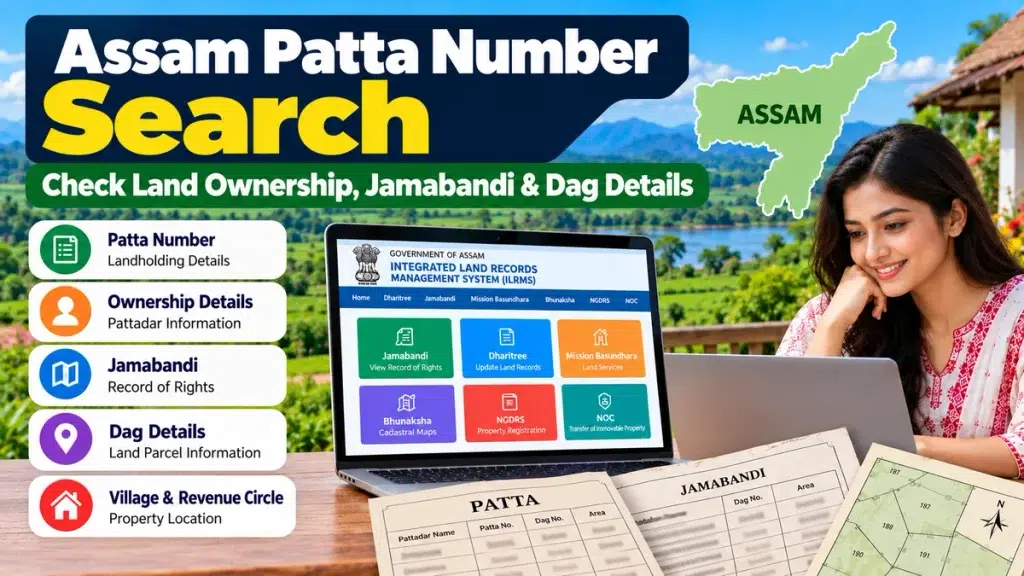
An Assam Patta Number Search can help landowners and property buyers verify important land-record information before buying, selling, inheriting or financing a property. A Patta Number is an important reference in Assam’s land records and is connected with details such as the pattadar, Dag Number, land area and Jamabandi.
Assam provides several digital land services through ILRMS, Dharitree and Mission Basundhara. Mission Basundhara also provides access to Jamabandi information and services related to mutation and updating land records.
Checking the correct Patta details can be particularly useful before a property purchase, home loan, mortgage, construction loan or land transfer.
What Is a Patta Number in Assam?
A Patta Number is used to identify a landholding in Assam’s revenue records. The landholding may contain one or more individual plots identified by separate Dag Numbers.
A Patta record may be associated with information such as:
- Pattadar or recorded landholder
- Patta Number
- Dag Number
- Village and revenue circle
- Recorded land area
- Land classification
- Mutation information
- Jamabandi entries
Mission Basundhara’s Digital Patta service currently uses details including district, circle, village and Patta Number when adding land information.
Assam Patta Number Search – Important Details
| Land Detail | Why It Is Important |
|---|---|
| Patta Number | Identifies the landholding |
| Pattadar Name | Shows the recorded landholder |
| Dag Number | Identifies an individual land parcel |
| Jamabandi | Shows Record of Rights information |
| Land Area | Helps confirm recorded property size |
| Village | Identifies property location |
| Revenue Circle | Shows revenue jurisdiction |
| Mutation | Records eligible ownership changes |
How to Check Assam Land Details by Patta Number
The available search method may vary depending on the land-record service and location.
Step 1: Open the Assam Land Records Service
Access the official Assam land-record system through ILRMS or Mission Basundhara.
Step 2: Select Your Location
Choose the relevant:
- District
- Revenue Circle
- Village or Mouza
These location details help identify the correct land record.
Step 3: Keep the Patta Number Ready
Enter or select the available Patta details where the service provides that option.
Step 4: Check Related Land Information
Review the available details, such as:
- Pattadar name
- Dag details
- Recorded land area
- Jamabandi information
- Mutation-related entries
Step 5: Compare With Your Documents
Always compare online information with the registered deed, mutation documents, revenue receipts and other original property papers before completing a major transaction.
Why Check Patta Number Before Buying Land?
Buying land can involve a large investment. A seller may provide several documents, but buyers should independently check the available land records before paying an advance.
Important details to verify include:
- Seller and pattadar name
- Patta Number
- Dag Number
- Recorded land area
- Land boundaries
- Mutation status
- Registered sale deed
- Land-revenue payments
- Land classification
- Applicable NOC
- Existing mortgage or legal dispute
This verification becomes even more important when the property may later be financed through a bank home loan or mortgage loan.
Patta Number and Jamabandi
Patta and Jamabandi information are closely connected with land-record verification.
Mission Basundhara currently includes a Jamabandi facility intended for checking ownership information relating to ancestral or other land.
Jamabandi may help users review recorded information associated with the landholding, while the Patta Number helps identify the relevant land record.
Patta Number and Mutation
Mutation is generally required when eligible ownership or recorded interest in land changes due to transactions such as sale or inheritance.
Mission Basundhara provides online land services involving mutation and updating of land records, reducing the need for citizens to visit government offices for several services.
Its service workflows use land information such as district, circle, village and Dag details to identify the property involved.
Patta Details for Home Loan and Property Finance
Banks generally conduct legal and technical verification before approving loans secured against property.
Documents that may be examined include:
- Registered title deed
- Jamabandi
- Patta and Dag details
- Mutation documents
- Land-revenue receipts
- Property boundaries
- Applicable permissions
- Encumbrance-related documents
Accurate land records can make property verification easier, although final loan approval depends on the lender’s eligibility, valuation and legal assessment.
Digital Patta in Assam
Assam also has an online Digital Patta Service through RTPS-Basundhara. Its application process collects land details including district, circle, village, Patta Number and pattadar information.
Landowners should use official portals when applying for or reviewing land-related services.
Frequently Asked Questions
Can I search Assam land records using a Patta Number?
Patta Number is an important identifier in Assam land records and is used in official services such as the Digital Patta application.
What is the difference between Patta and Dag Number?
A Patta Number identifies the landholding, while a Dag Number identifies an individual plot or parcel within the revenue record.
Can one Patta have several Dag Numbers?
Yes. A landholding may contain multiple plots represented by different Dag Numbers.
Why is Patta Number important before buying land?
It helps connect the property with recorded ownership, Dag details, Jamabandi and other land information.
Can Patta details help with a home loan?
Yes. Banks may review land records and ownership documents as part of legal verification for property-backed loans.
Conclusion
An Assam Patta Number Search can help you review important information about a landholding, including the pattadar, Dag Number, Jamabandi and recorded land area. Whether you are buying land, checking ancestral property, applying for mutation or preparing documents for a home loan, verifying Patta details can help reduce documentation errors.
For high-value property transactions, always compare digital records with registered documents and consider professional legal verification before making payment.