Assam Land Owner / Pattadar Name Search – Check Land Ownership & Jamabandi Online
Searching for an Assam land owner or Pattadar name online can be useful when checking ancestral property, verifying land before purchase, reviewing a Jamabandi, or confirming whether ownership details have been updated after mutation.
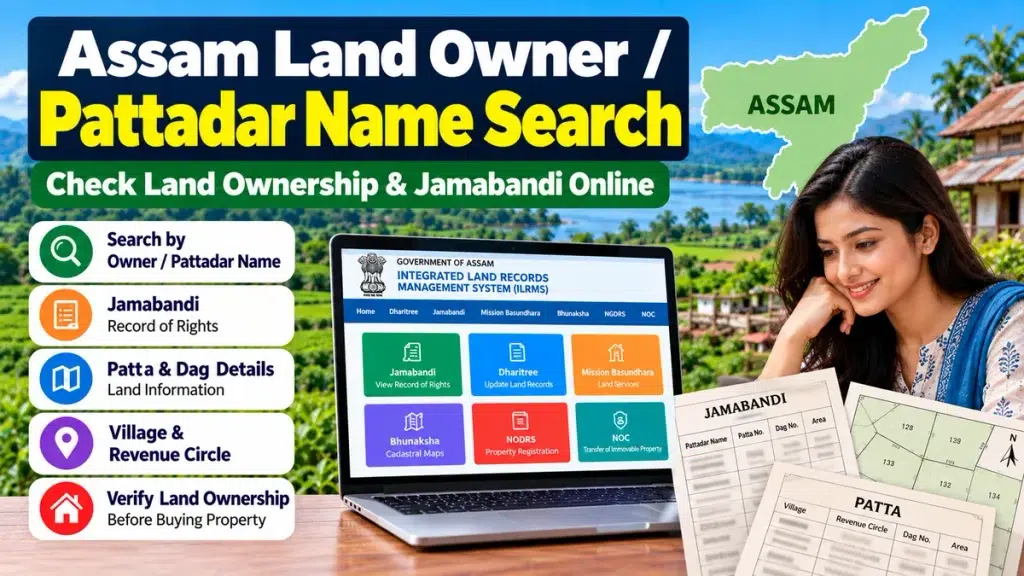
Assam provides digital land-record services through ILRMS, Dharitree and Mission Basundhara. The official Mission Basundhara portal provides a Jamabandi facility for checking ownership information relating to ancestral or other land. Its land-record search interface also supports name-based searches in relevant records.
For property buyers, landowners and families handling inherited property, checking the recorded Pattadar name can be an important part of property verification, home-loan documentation and land-transfer due diligence.
What Is a Pattadar in Assam?
A Pattadar is a person whose name is recorded against a landholding in the relevant Record of Rights or Jamabandi.
Land information associated with a Pattadar may include:
- Pattadar name
- Patta Number
- Dag Number
- Village
- Revenue Circle
- Recorded land area
- Land classification
- Mutation details
- Jamabandi entries
The Pattadar name is therefore an important detail when identifying and verifying a landholding.
Assam Pattadar Name Search – Quick Overview
| Detail | Purpose |
|---|---|
| Pattadar Name | Identify the recorded landholder |
| Patta Number | Identify the landholding |
| Dag Number | Identify a specific land parcel |
| Jamabandi | Check Record of Rights details |
| Village | Locate the land record |
| Revenue Circle | Identify revenue jurisdiction |
| Land Area | Compare recorded property size |
| Mutation | Check ownership-record updates |
How to Search Assam Land Records by Owner Name
The exact options can vary depending on the land record and service available.
Step 1: Open the Official Land Record Service
Use Assam’s official ILRMS or Mission Basundhara land-record facility.
Step 2: Select the Location
Keep the following information ready:
- District
- Revenue Circle
- Village
- Dag or Patta details, if known
Location information helps narrow down records when multiple people have similar names.
Step 3: Enter the Owner or Pattadar Name
Where name search is available, enter the Pattadar or occupier name. The current Mission Basundhara search interface indicates that at least three characters should be entered for its name-search facility.
Step 4: Match the Correct Land Record
Do not rely only on the person’s name. Compare the result with:
- Patta Number
- Dag Number
- Village
- Land area
- Jamabandi details
Step 5: Verify Supporting Documents
For a property purchase or financial transaction, compare digital information with the registered deed, mutation records, land-revenue receipts and other original documents.
Why Search Pattadar Name Before Buying Land?
Land can represent a substantial financial investment. Checking the recorded owner can help identify inconsistencies before you pay an advance or execute a sale deed.
Before buying property, consider verifying:
- Seller’s identity
- Recorded Pattadar name
- Patta and Dag numbers
- Jamabandi
- Mutation status
- Recorded land area
- Property boundaries
- Land classification
- Registered sale deed
- Revenue receipts
- Mortgage or legal claims
For expensive property transactions, independent legal verification is advisable.
Pattadar Name and Mutation
A property may be transferred through sale, inheritance or other legally permitted methods. However, the land record may also need to be updated through mutation.
Mission Basundhara describes mutation as recording the new owner’s name in the Record of Rights after an eligible ownership transfer. Its services include mutation by inheritance and mutation after deed registration.
If a property has changed hands but the old Pattadar’s name still appears in the record, the concerned parties should check whether the required mutation process has been completed.
What If the Pattadar Name Is Incorrect?
Mission Basundhara provides a Legacy Data Updation – Name Correction service for rectification of a Pattadar’s name in Jamabandi records, subject to the applicable requirements and supporting identification documents.
Do not assume that a spelling difference automatically means ownership is invalid. Check the supporting documents and contact the appropriate revenue authority when necessary.
Pattadar Details for Home Loan Verification
Banks and housing-finance companies generally conduct legal verification before approving property-backed finance.
Documents reviewed may include:
- Registered title deed
- Jamabandi
- Pattadar details
- Patta and Dag information
- Mutation documents
- Revenue receipts
- Property boundaries
- Encumbrance-related documents
Assam’s Digital Patta service also uses verified Pattadar and land details as part of the land-record process.
Frequently Asked Questions
Can I search Assam land records by owner name?
Assam’s Mission Basundhara portal provides land-record and ownership-checking facilities, including name fields in relevant search functions.
What is a Pattadar?
A Pattadar is a person whose name is recorded against a landholding in the Record of Rights or Jamabandi.
Is Pattadar name enough to verify a property?
No. Also check Patta Number, Dag Number, Jamabandi, mutation, registered deed and other supporting records.
Can an incorrect Pattadar name be corrected?
Mission Basundhara lists a Name Correction service under Legacy Data Updation, subject to applicable documentation.
Why should buyers check the Pattadar name?
It helps compare the seller’s claim with the available land record before a major property transaction.
Conclusion
An Assam Land Owner / Pattadar Name Search can help identify the recorded landholder and connect the name with important information such as the Jamabandi, Patta Number, Dag Number and land area.
Whether you are buying land, checking ancestral property, applying for mutation or preparing documents for a home loan, verifying the Pattadar information can help reduce property-documentation risks. For high-value transactions, always compare online records with registered documents and obtain professional legal verification where appropriate.