Gujarat Urban Land Record Online – Check Property Card, City Survey & Owner Details
Gujarat Urban Land Record Online services allow property owners, buyers and investors to check important land and ownership information for properties located in city survey and urban areas. Unlike rural Gujarat, where records such as 7/12, 8A and VF6 are commonly used, urban properties are generally connected with the Property Card and City Survey Record of Rights.
The Gujarat Revenue Department currently provides a dedicated online service for viewing Property Cards, separate from its rural Record of Rights service.
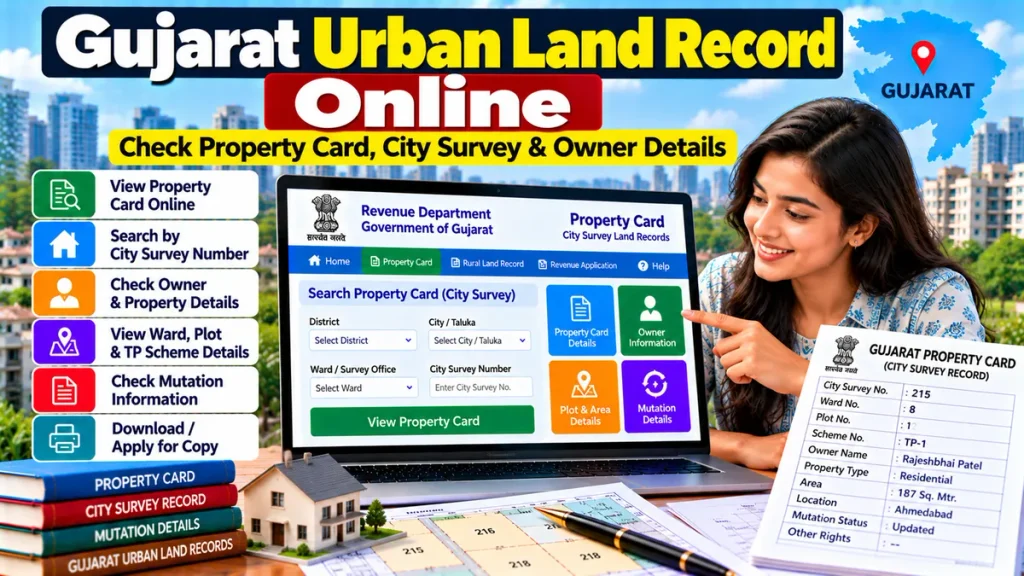
Gujarat Urban Land Record – Overview
| Details | Information |
|---|---|
| Record Type | Urban Land Record |
| Main Document | Property Card |
| Area | City Survey / Urban Area |
| Main Identifier | City Survey Number |
| Important Details | Holder, Area, Rights, Plot Information |
| Related Details | Ward, Sheet, Final Plot, TP Scheme |
| Mutation | City Survey Mutation Record |
| Useful For | Property Verification & Loans |
What Is Gujarat Urban Land Record?
Urban land records in Gujarat are maintained through the City Survey system.
The Gujarat Revenue Department’s Collector Manual states that the Record of Rights in a city survey area is known as a Property Card.
A Property Card can help identify important information connected with an urban land parcel and the rights recorded against it.
For property buyers, this record can be useful while checking a residential plot, commercial property, house or other city-survey land.
What Details Can a Gujarat Property Card Show?
Official Gujarat City Survey formats show that a Property Card may contain details such as:
- City Survey Number
- Ward Number
- Sheet Number
- Final Plot Number
- TP Scheme Number
- Property area
- Property-use type
- Current holder details
- Nature of rights
- Other rights or restrictions
The official Title-cum-Property Card format also includes geographical identification and entitlement-related information.
How to Check Gujarat Urban Land Record Online
The Gujarat Revenue Department lists Online Viewing of Property Cards among its official digital services.
To locate the correct urban land record, keep details such as:
District or City: Select the location where the property is situated.
City Survey Office / Ward: Choose the applicable city-survey jurisdiction where required.
City Survey Number: Enter the identification number connected with the property.
Ward / Sheet / Plot Details: These may help locate the exact record if several similar properties exist.
After finding the record, compare it with your registered sale deed and other property documents.
Property Card vs Rural 7/12
This distinction is important.
7/12 and 8A: Mainly used for rural or agricultural land.
Property Card: Used for land covered under city-survey areas.
The Gujarat Revenue Department maintains separate online services for rural Records of Rights and urban Property Cards.
If you are buying property in an urban area, relying only on a rural 7/12 search may therefore be inappropriate.
Gujarat Urban Land Mutation
Changes in urban property rights may occur after:
- Sale
- Inheritance
- Partition
- Gift
- Transfer
- Other eligible transactions
Gujarat’s official city-survey rules include a Register of Record of Rights and mutation-related records, showing transaction type, affected City Survey Number, area, nature of rights and new holder information.
After a property transfer, owners should check whether the expected change has been reflected in the city-survey record.
Why Check Urban Land Records Before Buying Property?
Urban property transactions can involve significant financial commitments.
Before paying a large advance or completing registration, compare:
- Seller or holder name
- City Survey Number
- Property Card
- Plot and area details
- TP Scheme / Final Plot information
- Mutation entries
- Registered sale deed
- Index-2
- Encumbrance-related records
- Physical property boundaries
Any mismatch should be investigated before completing the transaction.
How to Get a Gujarat Property Card Copy
The Gujarat Revenue Department’s iORA services currently include an application for obtaining a Property Card copy.
The same service list also includes applications for documents such as Index-2 and Encumbrance Certificate, which can be useful during property verification.
Keeping these records together can make future sale, loan and legal-document verification easier.
Gujarat Urban Land Record and Home Loans
Urban land records can also be relevant when applying for:
- Home loans
- Loan against property
- Commercial property finance
- Mortgage loans
- Property valuation
- Legal due diligence
Banks may request the Property Card along with the registered deed, Index-2, mutation information and other ownership documents.
A Property Card should therefore be treated as part of the complete property-document verification process, not as the only proof of title.
Frequently Asked Questions
Can Gujarat urban land records be checked online?
Yes. Gujarat Revenue Department provides an official online facility for viewing Property Cards.
What is the main urban land record in Gujarat?
The Property Card is the Record of Rights used for city-survey areas.
What is a City Survey Number?
It is an important identification number used to locate a specific urban land parcel in the city-survey system.
Can I apply for a Property Card copy online?
Yes. Gujarat’s iORA service currently lists an application for obtaining a Property Card copy.
Is Property Card the same as 7/12?
No. Property Cards are associated with city-survey areas, while 7/12 is mainly used for rural land.
What other documents should I check before buying urban property?
Check the registered sale deed, Property Card, mutation information, Index-2, applicable Encumbrance Certificate and physical property details.
Conclusion
Gujarat Urban Land Record Online services make it easier to check important city-survey property information such as Property Card, City Survey Number, holder details, land area, TP Scheme and mutation records. Before buying, selling or financing an urban property, comparing these records with the registered deed and other legal documents can help identify discrepancies early and improve property verification.