Gujarat VF6 Mutation Entry – Check Land Transfer, Mutation Status & Property Record Online
Gujarat VF6 Mutation Entry is an important part of the rural land-record system used to record changes in land rights. Village Form No. 6, commonly called VF6 or Mutation Register, records transactions and events such as sale, inheritance, partition and other eligible changes affecting a landholding.
For property buyers, farmers and landowners, checking VF6 can help verify whether a recent property transfer has been entered and certified before relying on updated 7/12 or 8A land records.
Gujarat’s e-Dhara system handles computerized land records, including mutations and Records of Rights such as VF6, 7/12 and VF8A.
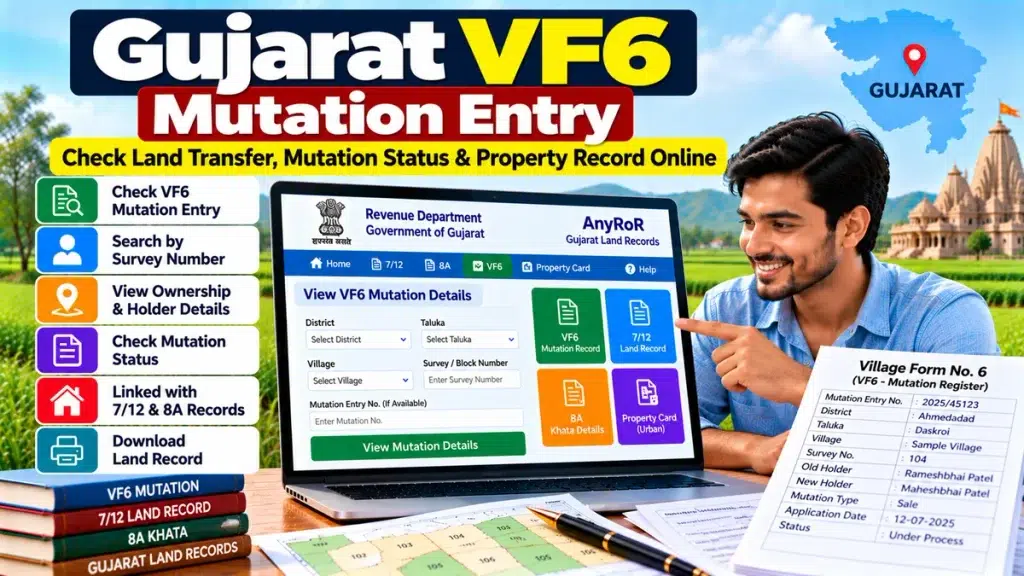
Gujarat VF6 Mutation Entry – Overview
| Details | Information |
|---|---|
| Record | Village Form No. 6 |
| Common Name | VF6 / Mutation Register |
| Purpose | Record changes in land rights |
| Related Records | VF7/12 and VF8A |
| Main System | e-Dhara |
| Common Cases | Sale, inheritance, partition, transfer |
| Important Detail | Mutation Entry Number |
| Useful For | Property verification |
What Is VF6 in Gujarat Land Records?
Village Form No. 6 is the mutation register used to record newly acquired or changed rights over rural land.
The Gujarat Revenue Department’s Collector Manual explains that newly acquired rights are entered in Village Form No. 6 and that disputed entries are examined before they are confirmed.
A VF6 entry may become necessary after events such as:
- Registered sale of land
- Inheritance
- Partition among family members
- Gift or transfer
- Acquisition
- Other recognized changes in land rights
How Does Gujarat Mutation Work?
When an eligible land transaction takes place, a mutation entry is created in the land-record system.
For agricultural land registrations, Gujarat’s documented workflow includes automatic generation of a mutation entry after registration. The entry is reflected in VF6, followed by verification and notice procedures before final updating of the mutation record.
The process can include:
- Property transaction or change in rights
- Mutation entry generated or submitted
- Entry reflected in VF6
- Verification by revenue officials
- Notice to interested parties
- Objection handling, if any
- Certification or final decision
- Update of connected land records
What Is the 135-D Notice?
A 135-D notice is an important stage in Gujarat’s mutation process.
Official workflow documentation shows that after a mutation entry is reflected in VF6, notice is provided to concerned parties and objections, if any, are handled before the mutation is finalized.
This helps ensure that affected parties have an opportunity to raise objections before a land-right change is incorporated into the final record.
VF6 and 7/12 Record
VF6 and 7/12 are closely connected.
VF6 records the mutation or change in rights.
VF7/12 reflects important land-right and plot information after applicable certified changes are incorporated.
The Gujarat Revenue Department explains that Village Form No. 6 is maintained for mutation entries and that newly acquired rights are incorporated into the relevant Record of Rights after the mutation process.
Therefore, after a mutation is approved, landowners should check whether the expected information has also appeared in the updated 7/12 record.
VF6 and Gujarat 8A Khata
Village Form 8A provides Khata or holding-level information.
When a certified mutation changes the holder or landholding details, related updates may also be reflected in the connected 8A record.
For stronger verification, check:
- VF6 mutation entry
- 7/12 land record
- 8A Khata
- Registered sale deed
- Survey or block number
- Land area
All of these records should reasonably correspond with one another.
How to Check Gujarat VF6 Mutation Details
Gujarat’s e-Dhara system provides computerized access to land records and supports mutation-related searches and status information. The system can be searched using details such as Khatedar name, Khata number and survey number.
When checking a mutation, keep details such as:
District: Where the land is situated.
Taluka: Relevant Taluka.
Village: Revenue village.
Survey/Block Number: Land parcel reference.
Mutation Entry Number: If available.
Khatedar Name: Recorded holder information.
Use these details to locate the relevant land and mutation record.
Why Check VF6 Before Buying Land?
A buyer should not rely only on the latest 7/12 copy.
Checking VF6 can help identify recent or pending changes in the property’s rights.
Before buying land, compare:
- Current holder name
- VF6 mutation entries
- Survey or block number
- 7/12 details
- 8A Khata information
- Registered sale deed
- Land area and boundaries
If a major transfer is registered but the mutation remains incomplete or disputed, additional verification may be required.
Disputed Mutation Entries
Not every mutation entry is automatically finalized.
The Gujarat Collector Manual states that objections are recorded separately and disputed entries are examined by the competent revenue authorities before confirmation.
If an entry is disputed, landowners should keep relevant sale deeds, inheritance documents, previous records and other supporting papers ready.
VF6 and Property Loans
Mutation records can also matter during agricultural loans, property-backed finance and mortgage verification.
A lender may review:
- Registered title document
- VF6 mutation entry
- Updated 7/12
- 8A Khata
- Survey details
- Other applicable property records
The exact requirements vary by lender and transaction.
Frequently Asked Questions
What is Gujarat VF6?
VF6 or Village Form No. 6 is the mutation register used to record changes in land rights.
Does a sale create a mutation entry?
For registered agricultural land transactions, Gujarat’s documented system provides for mutation entry generation and reflection in VF6.
What happens after VF6 mutation?
After verification, notice and objection handling, an eligible certified mutation is incorporated into connected land records.
Is VF6 the same as 7/12?
No. VF6 records mutation events, while 7/12 contains broader land and Record of Rights information.
Should I check VF6 before buying land?
Yes. It can help identify recent transfers, pending mutations or possible disputes affecting the land.
Conclusion
Gujarat VF6 Mutation Entry is a key record for tracking changes in rural land rights. Buyers and landowners should verify VF6 together with 7/12, 8A Khata, registered deeds, survey numbers and land-area details. Checking these records before a major property transaction can help identify pending mutations, mismatches or disputes early.