Gujarat 8A Khata Details – Check Land Account, Owner & Survey Information Online
Gujarat 8A Khata Details are an important part of the state’s rural land-record system. Village Form 8A, commonly called VF8A or 8A Khata, can help landowners, farmers and property buyers review information about a landholding, including the recorded holder, Khata or holding number, survey numbers, total area and revenue assessment.
Gujarat’s e-Dhara system provides computerized access to Records of Rights, including VF6, 7/12 and VF8A.
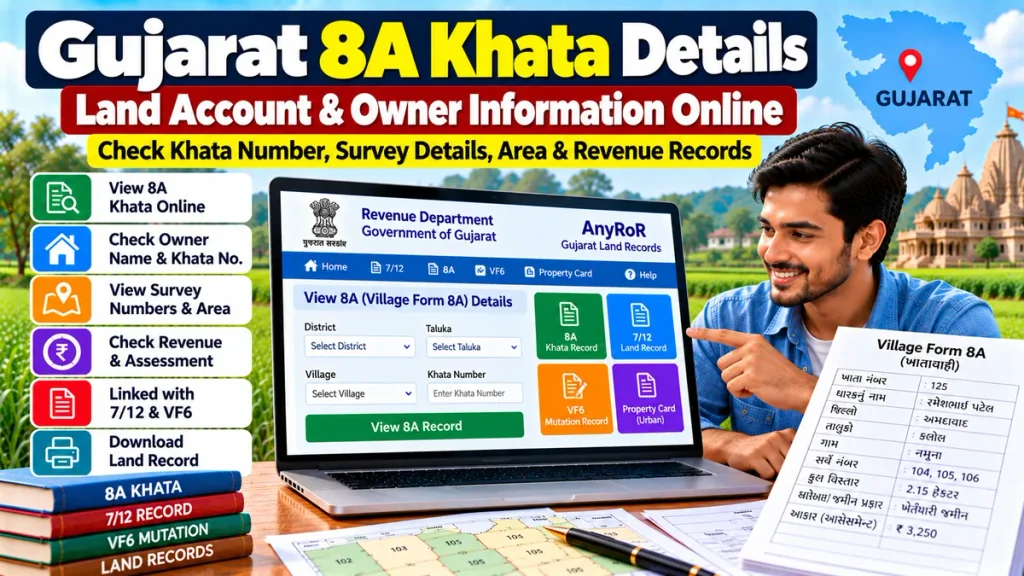
Gujarat 8A Khata – Overview
| Details | Information |
|---|---|
| Record | Village Form 8A |
| Common Name | 8A Khata / VF8A |
| Property Type | Rural Land |
| Main Purpose | Landholding account information |
| Important Details | Holder, Khata, Survey Numbers, Area |
| Related Records | VF6 and VF7/12 |
| System | e-Dhara / AnyRoR |
| Useful For | Property and land-record verification |
What Is Gujarat Village Form 8A?
The Gujarat Revenue Department describes Village Form No. 8A as the Khatavahi of land holdings.
It records important information such as:
- Name of the person holding the land
- Holding or Khata number
- Total survey numbers included in the holding
- Total land area
- Revenue assessment
The official Collector Manual also states that Village Form 8A is linked with Village Form No. 6 and Village Form 7/12.
This makes 8A especially useful when you want to understand all the land parcels recorded under a particular holding.
What Is a Khata Number?
A Khata number is the holding-account reference used to group land recorded under a particular holder or account.
A single Khata may include more than one survey number. Therefore, Village Form 8A can provide a broader view of a person’s landholding than checking only one individual plot.
This can be useful for:
- Family land verification
- Agricultural property records
- Inherited land
- Mutation checking
- Property purchase due diligence
- Loan and mortgage documentation
How to Check Gujarat 8A Khata Online
Gujarat’s Revenue Department provides online rural Record of Rights services, while the e-Dhara system is used for maintaining and accessing computerized village land records.
To search available 8A records, keep details such as:
District: Select the district where the land is located.
Taluka: Choose the relevant Taluka.
Village: Select the revenue village.
Khata or Landholder Details: Use the available account, holder or related land-record information to locate the correct entry.
The e-Dhara system supports access to VF8A along with VF6 and 7/12 Records of Rights.
What Details Should You Check in 8A?
When reviewing a Gujarat 8A Khata record, carefully compare the following:
Holder Name: Make sure the recorded name corresponds with the relevant land documents.
Khata Number: Verify that you are checking the correct holding account.
Survey Numbers: Review all land parcels linked with the account.
Total Area: Compare the recorded area with other revenue and property documents.
Assessment: Review applicable revenue assessment information where shown.
These details can be particularly important if several plots are held under one Khata.
Difference Between 8A and 7/12
Although both are important Gujarat land records, they serve different purposes.
Village Form 8A provides a consolidated view of a landholding or Khata, including the holder, survey numbers, area and assessment.
Village Form 7/12 contains more plot-specific Record of Rights and land information.
The Gujarat Collector Manual confirms that 8A is linked with both VF6 and 7/12.
For better property verification, it is useful to review both records.
Gujarat 8A and Mutation
Village Form 8A is also linked to Gujarat’s mutation process.
The Revenue Department states that after a mutation entry in Village Form No. 6 is certified, the relevant changes are incorporated into records such as 7/12 and 8A through the computerized e-Dhara system.
Therefore, after a sale, inheritance or another eligible change in rights, it is useful to check whether the expected update appears in the 8A record.
Why Check 8A Before Buying Land?
Buying agricultural or rural property can involve a significant financial commitment.
Before registration, compare the 8A Khata with:
- 7/12 land record
- VF6 mutation entries
- Registered sale deed
- Survey or block number
- Recorded land area
- Seller or holder details
- Actual property boundaries
This can help identify obvious inconsistencies before completing the transaction.
For high-value, inherited or disputed property, professional legal and survey verification may also be advisable.
8A Khata and Property Loans
Land records can also become important while applying for agricultural loans, mortgage finance or land-backed credit.
Depending on the lender and transaction, documents such as 8A, 7/12, mutation records and registered title documents may be requested.
Village Form 8A should therefore be treated as part of the overall property-document verification process, not as the only ownership document.
Frequently Asked Questions
What is Gujarat 8A?
Village Form 8A is the Khatavahi or landholding account record showing the holder, holding number, survey numbers, area and assessment.
Can Gujarat VF8A be accessed digitally?
Yes. Gujarat’s e-Dhara system supports computerized Records of Rights including VF6, 7/12 and VF8A.
Is 8A the same as 7/12?
No. 8A provides consolidated Khata or holding information, while 7/12 contains more detailed plot-level Record of Rights information.
Does mutation affect the 8A record?
Yes. Certified mutation changes are incorporated into land records such as 7/12 and 8A through the e-Dhara process.
Is 8A useful before purchasing land?
Yes. It can help verify the holder, Khata, linked survey numbers and total recorded land area before a property transaction.
Conclusion
Gujarat 8A Khata Details Online provide a convenient way to review important rural landholding information such as the holder name, Khata number, survey numbers, area and revenue assessment. By comparing 8A with 7/12, VF6 mutation entries, registered deeds and survey information, property owners and buyers can perform stronger land-record verification before major transactions.