Bihar Mutation Status / Dakhil Kharij Status – Check Application & Land Record Update Online
Bihar Mutation Status, also known as Dakhil Kharij Status, allows landowners and property buyers to track the progress of a mutation application online. After a property sale, inheritance, gift or other eligible transfer, mutation is used to update the relevant revenue record with the new landholder’s details.
Through the Bihar Bhumi portal, users can check mutation applications, returned applications and other land-related information without repeatedly visiting the revenue office. The portal currently lists online mutation status among its main citizen information services.
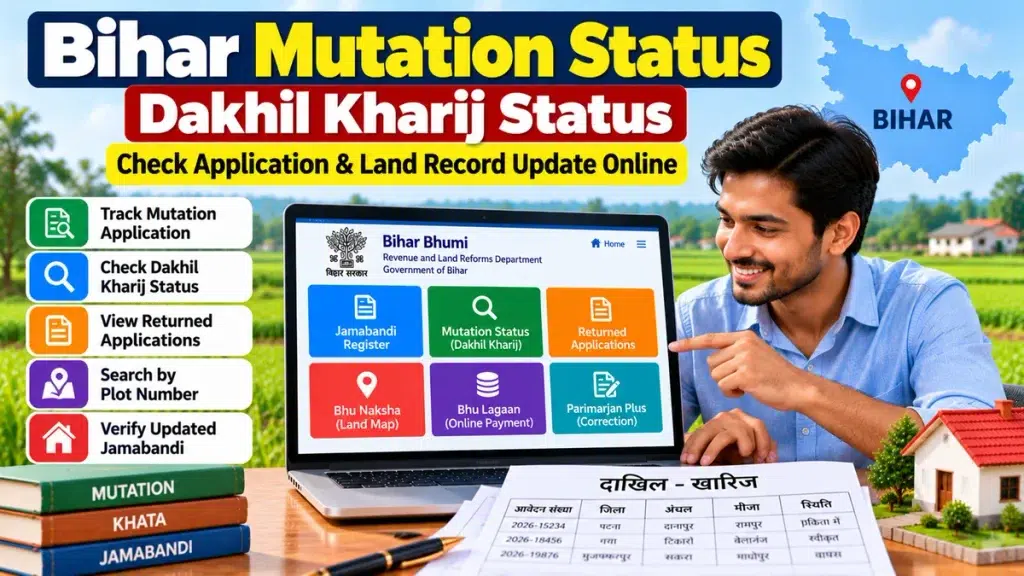
Bihar Dakhil Kharij Status – Overview
| Details | Information |
|---|---|
| Service | Bihar Mutation / Dakhil Kharij Status |
| Portal | Bihar Bhumi |
| Department | Revenue and Land Reforms Department, Bihar |
| Purpose | Track mutation application |
| Common Details Needed | District, Anchal, Application Number, Financial Year |
| Related Records | Jamabandi, Khata, Khesra |
| Other Services | Bhu Naksha, LPC, Parimarjan Plus |
| Mode | Online |
What Is Dakhil Kharij or Mutation?
Dakhil Kharij is commonly used to describe mutation of land records. Mutation updates revenue records after an eligible change in landholding.
For example, after purchasing land through a registered sale deed, the buyer may need to complete mutation so that the updated revenue record reflects the transaction.
Mutation can be important for future land tax, Jamabandi verification, property documentation, loan processing and subsequent property transactions.
However, mutation itself should not be considered a substitute for a legally valid registered title document.
How to Check Bihar Mutation Status Online
Bihar Bhumi provides an online facility to track mutation applications.
Users may need to enter:
- District
- Anchal
- Application number
- Financial year
- Security code
The official application-tracking page currently asks for these details before displaying the available status of an application.
Enter the information exactly as shown on the mutation application receipt. An incorrect application number or financial year may prevent the correct record from appearing.
Check Mutation Using Plot Details
In some cases, users may also want to know whether a mutation application has been filed against a particular plot.
Official Bihar Bhumi guidance states that users can check applications filed for a plot by selecting the district, Anchal and year, then entering the relevant Mauza and plot number.
This can be useful during property verification or land purchase due diligence, especially when checking recent activity connected with a Khesra or plot.
What Can Bihar Mutation Status Show?
Depending on the stage of the application, the online system can help users understand whether the mutation case is still being processed or has moved to another stage.
Bihar Bhumi separately provides facilities for:
- Mutation application status
- Applications returned by the Circle Officer
- Mutation error checking
- Filing objections in mutation cases
- Circle Officer court cause lists
These options are currently listed on the Bihar Bhumi portal.
Why Is Mutation Status Important?
Property transactions can involve substantial financial commitments. Tracking Dakhil Kharij status helps landholders identify whether their revenue-record update has progressed properly.
It is especially important when you plan to:
- Sell the property later
- Apply for a land or property loan
- Pay applicable land revenue
- Check updated Jamabandi
- Resolve inherited land records
- Verify a recently purchased plot
Once mutation is completed, users should also check the relevant Jamabandi record to see whether the expected land information has been updated.
Mutation Pending or Returned?
A mutation application may require additional action if there is incomplete information, a mismatch in land records or another issue requiring clarification.
Bihar Bhumi provides a separate facility to check applications that have been returned by the Circle Officer.
If an application is returned, carefully review the available reason and compare the submitted details with the sale deed, Jamabandi, Khata, Khesra and other supporting documents before taking the next step.
Mutation and Jamabandi Verification
After mutation, checking the Jamabandi record is an important follow-up step.
Verify whether important information such as:
Raiyat Name: reflects the expected landholder.
Khata and Khesra: correspond to the correct land.
Land Area: matches the property documents.
Jamabandi Details: are consistent with the mutation and registered deed.
This additional verification can help identify record discrepancies before a future property transaction.
Frequently Asked Questions
Can Bihar Dakhil Kharij status be checked online?
Yes. Bihar Bhumi currently provides an online mutation-status facility.
What details are needed to check mutation status?
The tracking page asks for details including district, Anchal, application number and financial year.
Can I check mutation applications by plot number?
Yes. Bihar Bhumi guidance describes a process for searching mutation applications filed against a plot using location, year, Mauza and plot details.
What if my mutation application was returned?
Check the separate returned-application status facility and review the reason before submitting the required correction or documents.
Should I check Jamabandi after mutation?
Yes. Reviewing the updated Jamabandi helps confirm whether the relevant revenue-record details have been updated as expected.
Conclusion
Bihar Mutation Status / Dakhil Kharij Status Online makes it easier to track an important stage of land-record updating. By checking the application status, reviewing returned cases and verifying the Jamabandi after mutation, landowners can maintain better property documentation and identify possible record issues before future sales, loans or other land transactions.