Car Insurance Renewal Online – Check Premium and Policy Expiry
Car insurance renewal is an important responsibility for every vehicle owner. An insurance policy remains valid only for a specified period, and allowing it to expire can result in a break in coverage. Fortunately, car insurance renewal online has made it easier to check policy expiry, compare premiums, review coverage, and renew an eligible policy from a mobile phone or computer.
Before renewing your car insurance, it is useful to review your existing coverage instead of simply paying the renewal premium. Your vehicle’s age, Insured Declared Value (IDV), claim history, No Claim Bonus (NCB), selected add-ons, deductibles, and policy type can all influence the premium.
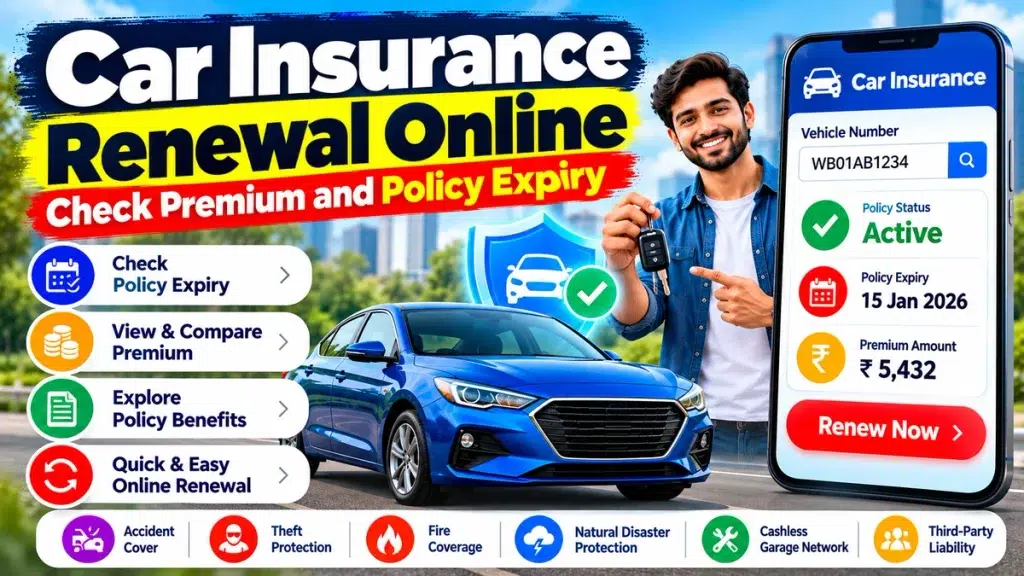
This guide explains how to renew car insurance online, check the policy expiry date, understand renewal premiums, compare coverage, and choose suitable protection for your vehicle.
What Is Car Insurance Renewal?
Car insurance renewal is the process of extending insurance coverage for another policy period before or after the existing policy expires, subject to the insurer’s terms.
When renewing, you generally have an opportunity to review your current policy and make certain changes. Depending on the insurer and policy, you may be able to change the IDV, select or remove optional add-ons, update personal information, or switch to another insurer.
Renewing before the expiry date is generally preferable because it helps maintain continuity of applicable insurance coverage.
Why Is Timely Car Insurance Renewal Important?
Driving without required motor insurance can create both legal and financial risks.
In India, third-party motor insurance is generally mandatory for vehicles used on public roads under applicable motor vehicle laws. If your required insurance expires, driving the vehicle without valid coverage can result in legal consequences.
An expired own-damage or comprehensive policy may also leave you financially exposed if your vehicle is damaged, stolen, or affected by another covered event during the uninsured period.
Timely renewal helps you:
- Maintain continuous applicable coverage
- Avoid an unexpected insurance lapse
- Retain eligible NCB benefits subject to applicable rules
- Keep your vehicle financially protected
- Review and update policy coverage
- Avoid complications associated with delayed renewal
Car Insurance Renewal at a Glance
| Renewal Factor | What to Check |
|---|---|
| Policy Expiry Date | Confirm when the existing coverage ends |
| Renewal Premium | Compare the total payable premium |
| Policy Type | Third-party, comprehensive, or own damage |
| IDV | Review the insured value of the vehicle |
| No Claim Bonus | Check your eligible NCB discount |
| Add-On Covers | Review which optional covers you need |
| Deductibles | Check compulsory and voluntary deductibles |
| Cashless Garages | Review the insurer’s available network |
| Personal Details | Update mobile number, email, address, etc. |
| Policy Document | Verify all details after renewal |
How to Check Car Insurance Policy Expiry Date
Before starting the renewal process, confirm when your existing policy expires.
The easiest way is to check your current insurance policy certificate. The document generally contains the applicable coverage period, including the policy start and end dates.
You may also check expiry-related information through your insurance company’s official website or application.
Depending on the service, you may need your:
- Policy number
- Vehicle registration number
- Registered mobile number
- Email address
- OTP or other verification
Basic insurance validity information may also be available through authorized vehicle-information services.
If different sources show conflicting dates, verify the information directly with your insurer and refer to the current policy certificate.
How to Renew Car Insurance Online
Online renewal is generally straightforward, although the exact process varies by insurer.
Step 1: Visit the Insurance Provider’s Official Website
Open the official website or mobile application of your current insurer. If you plan to switch insurers, use the official website of the insurance company you are considering.
Look for options such as Car Insurance Renewal, Renew Policy, or Motor Insurance.
Step 2: Enter Your Vehicle or Policy Details
You may be asked to enter your vehicle registration number, existing policy number, registered mobile number, or other information.
Enter the details carefully to retrieve the correct policy.
Step 3: Review Existing Coverage
Once your policy information appears, check the current coverage.
Review the policy type, IDV, deductibles, existing add-ons, NCB information, and other terms.
This is an important step because your insurance requirements may have changed since the previous policy period.
Step 4: Check the Renewal Premium
The insurer will generally provide a premium quotation based on the selected coverage and available information.
Do not immediately accept the quotation based solely on convenience. Review what is included in the premium.
Step 5: Select Necessary Add-On Covers
If you have comprehensive or eligible own-damage insurance, optional add-ons may be available.
Common add-ons include:
- Zero depreciation cover
- Roadside assistance
- Engine protection
- Return to invoice
- Consumables cover
- Key replacement cover
Availability and eligibility depend on the insurer, vehicle, and policy conditions.
Step 6: Verify Your Details
Before payment, confirm the vehicle registration number, personal information, IDV, NCB, coverage type, and selected add-ons.
Incorrect information may create problems later, particularly during a claim.
Step 7: Complete Payment
Use the available secure payment method to pay the renewal premium.
After successful processing and policy issuance, you should receive the renewed insurance document electronically.
Download and safely store the document.
How Is the Car Insurance Renewal Premium Calculated?
There is no single renewal premium applicable to every car.
Several factors can influence the amount you pay.
Vehicle Age
The age of the vehicle can affect its IDV and own-damage premium. As a car gets older, its value generally changes.
Make and Model
The vehicle’s manufacturer, model, variant, engine specifications, and repair costs can affect insurance pricing.
Insured Declared Value
The Insured Declared Value (IDV) broadly represents the insured value of the vehicle for certain claims, such as total loss or theft, subject to policy conditions.
IDV can influence the own-damage portion of the premium.
Location
The place where the vehicle is registered or used can influence risk assessment and premium calculations.
Previous Claims
Your previous claim history can affect renewal pricing and NCB eligibility.
Add-On Covers
Adding optional protections increases the scope of coverage but can also increase the total premium.
What Is No Claim Bonus During Renewal?
No Claim Bonus, commonly called NCB, is a discount that may be available on the own-damage premium when an eligible policyholder has not made a claim during the previous policy period.
NCB can increase over consecutive claim-free years up to applicable limits.
Before renewing, check whether your NCB has been calculated correctly.
Providing incorrect information about your claim history or NCB eligibility can affect future claims, so always provide accurate details.
Should You Compare Car Insurance Before Renewal?
Yes. Renewal is a useful opportunity to compare insurance options.
Your existing insurer may provide a convenient renewal offer, but you are generally not required to continue with the same insurer if another suitable option is available and switching is permitted.
When comparing policies, look beyond the premium.
Compare:
Coverage: Understand exactly what events and losses are covered.
IDV: Compare the insured value offered for your vehicle.
Deductibles: Check how much you may have to pay yourself during a claim.
Add-Ons: Determine whether useful optional protections are available.
Cashless Garage Network: Check whether convenient repair garages are included in the insurer’s network.
Claim Support: Understand the insurer’s claim procedure and required documentation.
Exclusions: Carefully review circumstances where the insurer may not provide coverage.
What Happens If Car Insurance Expires?
If your insurance has already expired, contact an authorized insurer promptly.
The exact renewal or new-policy process depends on the type of policy, the duration of the break, and the insurer’s requirements.
For own-damage coverage, an insurer may request a vehicle inspection before issuing or restoring coverage after a break.
An insurance lapse may also affect certain benefits if the renewal is delayed beyond applicable time limits.
Most importantly, do not assume that paying a premium automatically provides retroactive coverage for incidents that occurred during an uninsured period.
Coverage generally applies according to the dates stated in the issued policy.
Can You Renew an Expired Car Insurance Policy Online?
In many cases, you can initiate the process online even after a policy has expired.
However, an expired policy may involve additional steps.
The insurer may ask for vehicle photographs, an inspection, additional documents, or verification before providing own-damage coverage.
Therefore, renewing before expiry is usually simpler.
Documents and Information Needed for Renewal
The exact requirements vary, but keeping basic information ready can make online renewal faster.
You may need:
- Vehicle registration details
- Existing insurance policy
- Previous insurer information
- Registered mobile number
- Contact details
- Claim history
- NCB information
- Vehicle-related details
Additional information may be requested depending on the insurer and policy.
Tips to Reduce Car Insurance Renewal Premium
A lower premium can be useful, but it should not come at the expense of necessary coverage.
First, claim the correct NCB if you are eligible. You can also review optional add-ons and remove those that are no longer useful for your vehicle.
Compare quotations from authorized insurers while keeping coverage broadly comparable.
Choosing a higher voluntary deductible may reduce the premium in some cases, but it also means you may need to pay more yourself during an eligible claim. Consider this trade-off carefully.
Avoid reducing coverage simply to obtain the lowest possible renewal price.
Common Mistakes to Avoid During Renewal
Do not wait until the last moment to check your expiry date. Starting early gives you more time to compare options.
Avoid entering an incorrect NCB percentage or hiding previous claim information.
Do not select an unrealistically low IDV simply to reduce the premium without understanding how it may affect an eligible total-loss or theft settlement.
Finally, always read the policy wording, exclusions, deductibles, and selected add-ons before completing payment.
Frequently Asked Questions (FAQ)
1. Can I renew my car insurance online?
Yes. Many insurance companies allow eligible customers to renew car insurance through their official websites or mobile applications.
2. How can I check my car insurance expiry date?
Check your current policy certificate or your insurer’s official online service. Available insurance validity information may also be accessible through authorized vehicle-information services.
3. Can I renew car insurance before the expiry date?
Yes. Insurers generally provide an option to renew before expiry. The exact advance-renewal period can vary by provider.
4. How is my renewal premium calculated?
It can depend on the vehicle’s age, make and model, IDV, location, policy type, add-ons, deductibles, claim history, NCB eligibility, and insurer pricing.
5. What happens if I forget to renew my car insurance?
Your applicable coverage can lapse after the policy expires. An expired own-damage policy may require additional verification or inspection before new coverage is issued.
6. Can I change my insurance company during renewal?
Generally, you can compare and switch to another insurer at renewal, subject to applicable requirements and policy conditions.
7. Will my No Claim Bonus be lost if I change insurers?
NCB may generally be transferred when switching insurers, subject to eligibility, verification, documentation, and applicable rules.
8. Is comprehensive car insurance mandatory?
Third-party insurance is generally mandatory for vehicles used on public roads in India. Comprehensive insurance provides broader protection but is generally optional unless required under another agreement.
9. Is the lowest renewal premium always the best option?
No. Compare coverage, IDV, deductibles, exclusions, add-ons, claim support, and other policy conditions along with the premium.
10. Do I receive the policy immediately after online renewal?
For many straightforward renewals, a digital policy may be issued after successful processing and payment. However, additional verification or inspection can sometimes delay issuance.
Conclusion
Car insurance renewal online provides a convenient way to check your policy expiry date, compare premiums, review coverage, and maintain insurance protection without visiting an insurance office.
Before renewing, carefully check the expiry date, IDV, NCB, deductibles, add-ons, policy type, exclusions, and total premium. Comparing policies can also help you determine whether your existing coverage continues to meet your requirements.
Try to renew before your current policy expires to reduce the risk of a coverage break and additional renewal requirements. After renewal, download the updated policy document and verify that the vehicle number, coverage dates, personal information, IDV, and selected benefits are correct.
Disclaimer: This article is for general informational and educational purposes only. Insurance premiums, coverage, NCB rules, renewal requirements, legal requirements, add-ons, and policy conditions vary by insurer and may change over time. Always verify current information and policy terms directly with an authorized insurance provider before purchasing or renewing car insurance.