Car Insurance Online – Check Coverage, Premium and Policy Benefits
Car insurance is an important financial protection for vehicle owners. Whether you drive your car every day or use it occasionally, unexpected events such as accidents, theft, fire, natural disasters, or third-party damage can lead to significant expenses. A suitable car insurance policy can help reduce the financial burden associated with these situations.
Today, car owners can explore car insurance online, compare different policy options, understand coverage, estimate premiums, and review available benefits before choosing a plan. Online insurance platforms have made the process more convenient because policy information can be checked from a mobile phone or computer.
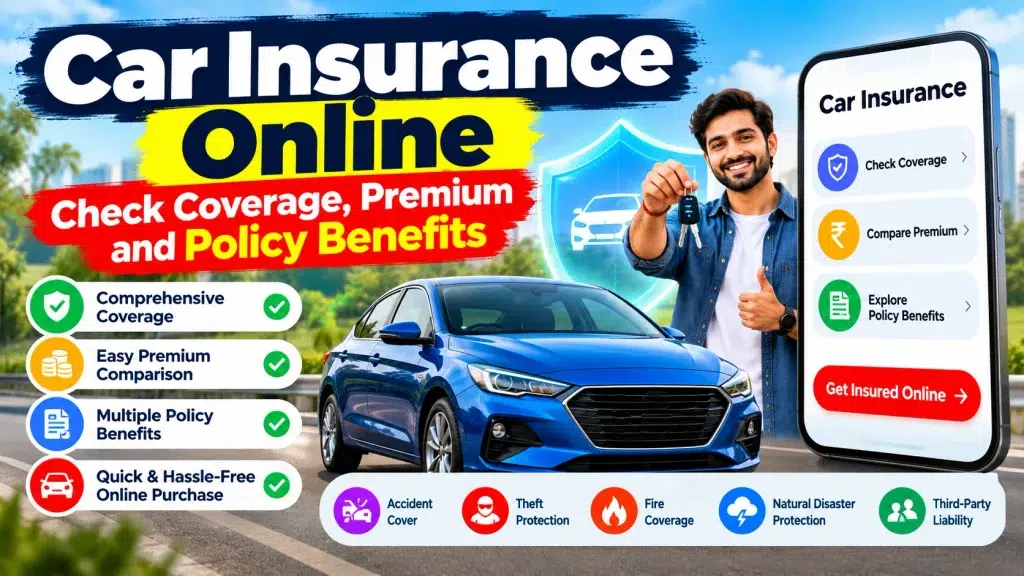
However, choosing car insurance should not be based only on the lowest premium. Coverage limits, exclusions, deductibles, add-ons, claim procedures, and insurer services should also be considered. This guide explains car insurance coverage, premium factors, policy benefits, available policy types, and important points to check before purchasing or renewing insurance.
What Is Car Insurance?
Car insurance is an agreement between a vehicle owner and an insurance company. The policyholder pays a premium, and the insurer provides financial protection according to the terms and conditions mentioned in the policy.
The exact protection depends on the type of insurance selected. Some policies primarily cover third-party liabilities, while comprehensive policies may also provide protection against damage to the insured vehicle.
Before purchasing a policy, carefully read the policy wording because coverage, limits, deductibles, exclusions, and claim conditions can vary between insurers and plans.
Types of Car Insurance Policies
Understanding the different types of car insurance can help you choose suitable coverage.
1. Third-Party Car Insurance
Third-party insurance primarily provides protection against legal liabilities arising from injury, death, or property damage involving a third party, subject to policy terms and applicable regulations.
In India, third-party motor insurance is generally mandatory for vehicles used on public roads under applicable motor vehicle laws.
However, third-party insurance does not normally cover damage to your own vehicle.
2. Comprehensive Car Insurance
Comprehensive insurance offers broader protection. In addition to third-party liability coverage, it can provide protection against certain types of damage to your own vehicle.
Depending on the policy, coverage may include:
- Accidental damage
- Theft
- Fire
- Natural disasters
- Certain man-made incidents
- Third-party liabilities
Coverage remains subject to policy terms, exclusions, deductibles, and limits.
3. Standalone Own Damage Insurance
Standalone own damage insurance is designed to cover eligible damage to the insured vehicle. It may be purchased in situations where the vehicle already has an eligible third-party policy.
It can provide protection against events such as accidents, theft, fire, and specified natural or man-made disasters according to the policy wording.
Car Insurance Coverage at a Glance
| Coverage Type | Third-Party Policy | Comprehensive Policy |
|---|---|---|
| Third-Party Liability | Yes | Yes |
| Own Vehicle Accident Damage | No | Usually Yes |
| Vehicle Theft | No | Usually Yes |
| Fire Damage | No | Usually Yes |
| Natural Disaster Damage | No | Usually Yes |
| Personal Accident Cover | Subject to applicable terms | Subject to applicable terms |
| Add-On Covers | Limited/Not Applicable | Usually Available |
| Own Vehicle Protection | No | Yes, subject to conditions |
The exact coverage offered by an insurer may differ, so always check the policy document before purchasing.
What Does Comprehensive Car Insurance Usually Cover?
A comprehensive policy can offer protection against several risks.
Accidental Damage
If your insured car is damaged in an accident, eligible repair expenses may be covered according to the terms of your policy.
Theft
If the insured vehicle is stolen and cannot be recovered, the insurer may settle an eligible claim based on the applicable policy conditions and insured value.
Fire
Eligible losses caused by fire, explosion, or related covered events may be included.
Natural Disasters
Certain policies can cover damage resulting from floods, cyclones, storms, earthquakes, landslides, and other specified natural events.
Third-Party Liability
Comprehensive policies generally include the required third-party liability component or operate alongside the applicable third-party cover.
What Is a Car Insurance Premium?
A car insurance premium is the amount you pay to the insurance provider for your policy. Premiums are not the same for every vehicle or policyholder.
Several factors can influence the final amount.
Factors That Can Affect Car Insurance Premium
Vehicle Type: The make, model, variant, engine specifications, and value of the vehicle can affect insurance pricing.
Age of the Car: As a vehicle becomes older, its insured value may change, which can influence the own-damage premium.
Location: The area where the vehicle is registered or primarily used may affect risk assessment and premium calculations.
Policy Type: Comprehensive insurance generally costs more than basic third-party coverage because it offers wider protection.
Insured Declared Value (IDV): IDV broadly represents the insured value of the vehicle for certain types of claims. It can influence the premium for own-damage coverage.
Add-On Covers: Selecting additional protections such as zero depreciation or roadside assistance can increase the total premium.
Claim History: Previous claims and eligibility for a No Claim Bonus may also affect renewal pricing.
What Is No Claim Bonus?
A No Claim Bonus (NCB) is a discount that may be available on the own-damage premium when the policyholder does not make an eligible claim during the previous policy period.
The discount can increase over consecutive claim-free years, subject to applicable rules and the insurer’s policy.
NCB is generally associated with the policyholder rather than simply staying with the vehicle. Therefore, it may be transferable when changing vehicles or insurers, subject to required documentation and conditions.
Popular Car Insurance Add-On Covers
Comprehensive policies may allow customers to purchase optional add-ons for additional protection.
Zero Depreciation Cover
Under a standard claim, depreciation may be applied to certain replaced vehicle parts. Zero depreciation cover can reduce the impact of eligible depreciation deductions, subject to the policy conditions.
Roadside Assistance
This add-on may provide assistance if the car breaks down, develops a flat tyre, requires towing, has a battery problem, or experiences another covered roadside issue.
Engine Protection
Standard policies may not cover every type of engine damage. Engine protection can provide additional coverage for specified circumstances, depending on the insurer.
Return to Invoice
In certain total-loss or theft situations, this add-on may help reduce the difference between the insured settlement amount and the vehicle’s invoice-related value, subject to policy conditions.
Consumables Cover
This can provide coverage for certain consumable items used during eligible accident repairs that may otherwise be excluded from a standard claim.
Benefits of Buying Car Insurance Online
Purchasing or renewing car insurance online can make policy research easier.
You can compare coverage options, review premiums, check add-ons, understand exclusions, and read policy information without visiting multiple insurance offices.
Another advantage is access to digital documents. After successful policy issuance, insurance documents are generally provided electronically, allowing you to keep a digital copy for future reference.
Online premium calculators can also provide estimates after entering vehicle and policy details. However, the final premium may change after verification or based on the insurer’s underwriting criteria.
How to Check Car Insurance Online
Checking insurance details online is generally straightforward.
Visit your insurer’s official website or another authorized platform and enter the required vehicle or policy information. Depending on the service, you may need details such as:
- Vehicle registration number
- Existing policy number
- Registered mobile number
- Vehicle make and model
- Registration year
After verification, available policy information may be displayed.
For privacy and security, avoid entering vehicle or personal details on unknown websites.
How to Choose the Right Car Insurance Policy
Do not choose a policy based solely on price. A cheaper policy may not necessarily provide the protection you need.
Compare the scope of coverage, IDV, deductibles, add-ons, exclusions, cashless garage facilities, claim procedures, customer support, and policy conditions.
Consider how you use your vehicle as well. A person who drives frequently may have different insurance priorities from someone who uses a car occasionally.
What Is Not Usually Covered?
Car insurance policies contain exclusions. Common exclusions may include normal wear and tear, mechanical or electrical breakdowns unrelated to an insured event, driving without a valid licence, using the vehicle outside permitted purposes, and certain losses involving policy violations.
Damage occurring while driving under the influence of alcohol or prohibited substances may also be excluded according to applicable policy conditions and law.
Additionally, a standard comprehensive policy does not automatically mean that every type of damage is covered.
Always read the exclusions section carefully.
Car Insurance Renewal Online
Car insurance policies generally have a defined validity period. Renewing the policy before expiry helps maintain continuous coverage.
During renewal, review your current coverage instead of automatically selecting the same plan. Check whether your vehicle’s value has changed, whether you still need existing add-ons, and whether better coverage options are available.
You should also verify NCB eligibility and update vehicle or contact information where necessary.
Allowing a policy to expire can lead to a break in coverage and may involve additional requirements when purchasing insurance again.
Documents and Details Commonly Required
The exact requirements depend on the insurer and transaction, but you may need your vehicle registration certificate details, previous insurance policy information, identity/contact information, and vehicle-related details.
For claims, additional documents such as a claim form, repair estimate, photographs, driving licence, RC information, or police documentation may be requested depending on the incident.
Frequently Asked Questions (FAQ)
1. Can I buy car insurance online?
Yes. Many authorized insurance companies provide facilities to purchase or renew eligible car insurance policies online through their official websites or authorized digital platforms.
2. Which car insurance is better: third-party or comprehensive?
It depends on your requirements. Third-party insurance primarily covers liabilities toward third parties, while comprehensive insurance generally provides broader protection, including eligible damage to your own vehicle.
3. How is a car insurance premium calculated?
Premiums can depend on the vehicle’s make, model, age, location, insured value, selected coverage, add-ons, claim history, applicable discounts, and insurer-specific pricing factors.
4. What is IDV in car insurance?
IDV stands for Insured Declared Value. It broadly represents the insured value used for certain types of claims, such as total loss or theft, subject to the policy’s terms and conditions.
5. Does car insurance cover theft?
Comprehensive or eligible own-damage insurance can generally cover vehicle theft, subject to the applicable policy terms and successful claim assessment. Basic third-party insurance does not cover theft of the insured vehicle.
6. What is zero depreciation car insurance?
Zero depreciation is an optional add-on that can reduce eligible depreciation deductions on replaced parts during certain claims. Conditions and exclusions apply.
7. Can I renew expired car insurance online?
Many insurers allow customers to initiate renewal online, but an expired policy may require additional verification or vehicle inspection before coverage is issued.
8. Is the cheapest car insurance policy always the best?
Not necessarily. Premium is only one factor. Coverage, exclusions, deductibles, claim support, add-ons, garage network, and policy limits should also be compared.
Conclusion
Buying car insurance online makes it easier to compare policies, understand coverage, estimate premiums, review add-ons, and manage renewals. However, selecting the right policy requires more than simply choosing the lowest available premium.
Before purchasing or renewing insurance, compare third-party and comprehensive coverage, check the IDV, review deductibles and exclusions, evaluate useful add-ons, and understand the claim process. Make sure all information submitted to the insurer is accurate and keep your policy documents safely stored.
The right car insurance policy can provide valuable financial protection when an unexpected accident, theft, fire, natural disaster, or third-party liability occurs. Since insurance products and terms vary between providers, always review the latest policy wording and conditions from an authorized insurer before making a decision.
Disclaimer: This article is for general informational and educational purposes only. Insurance coverage, premiums, benefits, exclusions, legal requirements, and claim conditions may vary by insurer, policy, vehicle, and applicable regulations. Always verify current terms directly with an authorized insurance provider before purchasing or renewing a policy.