Assam Land Record by Dag Number – Check Jamabandi, Patta & Ownership Details Online
If you know the Dag Number of a land parcel in Assam, it can make searching and verifying land-related information much easier. A Dag Number is commonly used to identify a specific plot of land within the revenue records of a village.
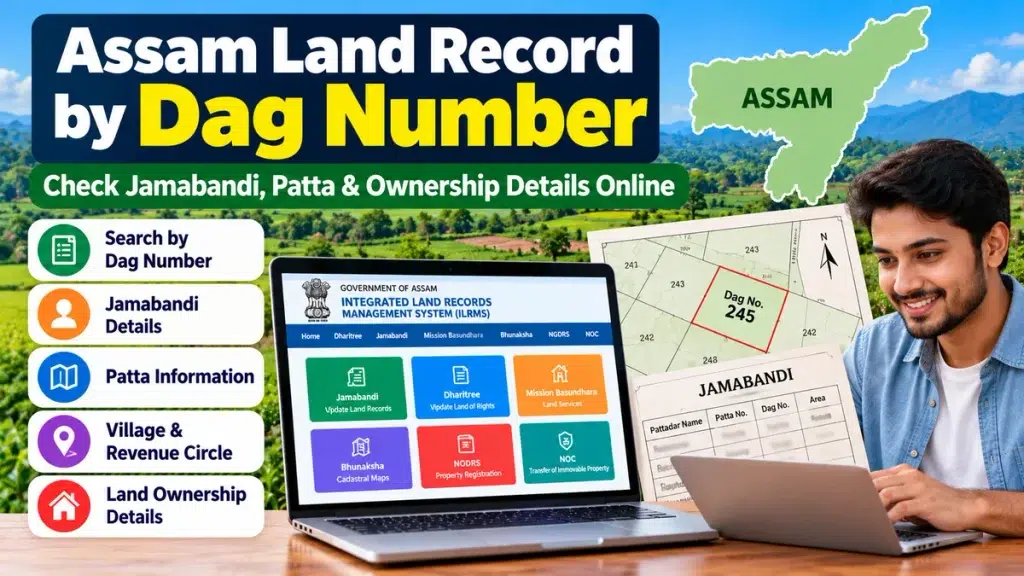
Assam’s digital land-record ecosystem includes Dharitree, ILRMS and Mission Basundhara, where citizens can access Jamabandi information and several land-related services online. The official Dharitree citizen service allows users to select their district, revenue circle and village to access available land-record information.
For anyone planning to buy land, sell property, apply for mutation, verify inherited property or prepare documents for a home loan, checking the Dag details along with the Jamabandi can be an important step.
What Is a Dag Number in Assam Land Records?
A Dag Number is an identification number assigned to a particular parcel or plot of land in revenue records.
A single Patta may contain one or more Dag Numbers. Therefore, knowing the correct Dag Number can help identify the exact plot connected with a land transaction.
Dag details may be useful for checking:
- Recorded landholder or pattadar
- Patta information
- Land area
- Village and revenue circle
- Jamabandi record
- Mutation-related information
- Land schedule
- Property documentation
Mission Basundhara’s online services also use Dag selection while processing different land-related applications, and the corresponding land schedule can be populated from the selected Dag.
Assam Land Record by Dag Number – Quick Guide
| Details | Why It Matters |
|---|---|
| Dag Number | Identifies a specific land parcel |
| Patta Number | Identifies the landholding record |
| Pattadar Name | Shows the recorded landholder |
| Land Area | Helps verify recorded plot size |
| Village | Identifies the property location |
| Revenue Circle | Shows revenue jurisdiction |
| Jamabandi | Provides Record of Rights information |
| Mutation | Reflects eligible ownership-record changes |
How to Check Assam Land Record Using Dag Number
You can use the available Assam land-record services to locate information connected with a Dag.
Step 1: Open the Land Record Service
Access the Assam Dharitree/ILRMS citizen land-record facility.
Step 2: Select District
Choose the district where the property is located.
Step 3: Select Revenue Circle
Select the appropriate revenue circle.
Step 4: Choose Village or Town
Select the village or town under which the land is recorded.
Step 5: Find the Relevant Dag
Use the available land-record information to identify the correct Dag and associated Jamabandi details.
Assam’s Basundhara dashboard also contains a Dag Details facility where district, office, village and Dag Number can be selected or entered to check available records.
Why Check Dag Number Before Buying Land?
Land purchase is a major financial decision. Before paying an advance amount, buyers should compare the property documents with the available land records.
Important details to verify may include:
- Seller’s name
- Pattadar name
- Correct Dag Number
- Patta Number
- Recorded land area
- Property boundaries
- Mutation status
- Registered sale deed
- Land-revenue receipt
- Land classification
- Applicable NOC
- Existing mortgage or legal claims
This becomes particularly important when the property will later be used for a home loan, construction loan, mortgage or resale.
Dag Number and Mutation
When ownership changes through an eligible sale, inheritance, gift or another permitted transaction, land records may need to be updated through mutation.
Mission Basundhara provides online land-related services including mutation and record-updating facilities. Its service workflow uses information such as district, circle, village and Dag to identify the land involved in an application.
Keeping mutation and land records updated can make future property verification easier.
Dag Number for Home Loan and Property Verification
Banks and housing-finance companies generally verify the legal status and identification of a property before approving secured finance.
Depending on the property, documents reviewed may include:
- Registered title deed
- Jamabandi
- Patta and Dag information
- Mutation documents
- Land-revenue receipts
- Property boundaries
- Applicable approvals
- Encumbrance-related documents
A matching Dag Number helps connect the physical plot with its revenue-record information. However, loan approval depends on the lender’s complete legal, technical and financial assessment.
What If Your Land Record Is Not Available Online?
The Dharitree citizen portal states that if a record is missing from the online system, users should contact the concerned Circle Office. It also notes that certified copies of Jamabandi or Record of Rights can be obtained through Assam’s RTPS service.
Frequently Asked Questions
Can I check Assam land records using a Dag Number?
Yes. Assam’s land-record systems use Dag details for identifying land parcels, and the Basundhara dashboard provides a Dag Details search facility.
What is the difference between Dag and Patta Number?
A Dag Number identifies a particular plot, while a Patta Number relates to the landholding record.
Can one Patta contain multiple Dag Numbers?
Yes, a landholding may include multiple plots recorded under different Dag Numbers.
Is Dag Number important when buying land?
Yes. It helps identify the exact plot and compare it with Jamabandi, Patta, deed and other property documents.
Can I get a certified Jamabandi online?
The Dharitree citizen portal directs users to Assam RTPS for certified Jamabandi or Record of Rights copies.
Conclusion
Checking an Assam Land Record by Dag Number can help you identify a specific plot and review important information such as the Jamabandi, Patta, pattadar and recorded land area. Whether you are buying property, applying for mutation, checking inherited land or preparing documents for a home loan, verifying the correct Dag details can reduce documentation mistakes.
For any high-value property transaction, compare the online record with registered documents and consider professional legal verification before making payment.