Damaged Hair Treatment – Discover Hair Care, Hair Color & Makeover Ideas
Healthy-looking hair can make a noticeable difference to your overall appearance, but regular heat styling, hair coloring, bleaching, chemical treatments, environmental exposure, and rough handling can leave hair feeling dry, brittle, frizzy, or difficult to manage. If your hair has lost its softness and shine, building the right hair care routine can help improve its appearance and prevent additional cosmetic damage.
At the same time, you may want to refresh your look with a new haircut or hair color. Modern AI hairstyle apps and virtual hair makeover tools make this easier by allowing you to explore different hairstyles and colors before making a real change.
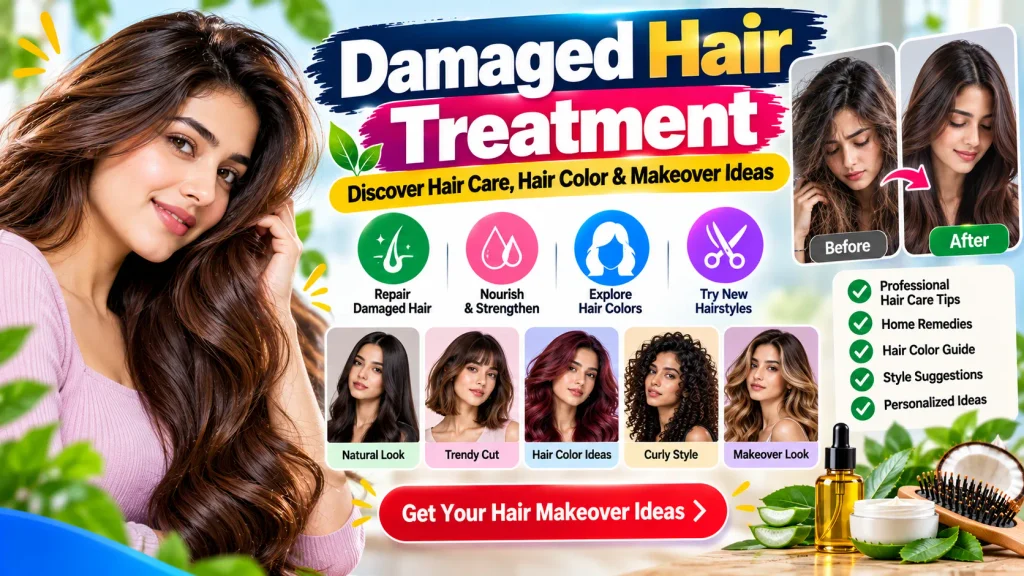
This guide explains common signs and causes of damaged hair, practical care ideas, ways to protect colored and heat-styled hair, and how virtual makeover technology can help you discover a new look without immediately cutting or coloring your hair.
What Is Damaged Hair?
Hair damage generally refers to changes in the hair shaft that can make hair feel rough, dry, weak, tangled, or more likely to break.
The outer surface of a hair strand helps protect its internal structure. Repeated chemical processing, excessive heat, friction, and other stress can affect this protective surface.
Damaged hair may become harder to style and may not reflect light as evenly, which can make it appear dull.
It is important to distinguish hair-shaft damage from medical hair loss. Cosmetic hair care can improve manageability and help prevent further breakage, but persistent hair loss from the root may require professional medical evaluation.
Common Signs of Damaged Hair
Hair damage does not look exactly the same for everyone. Some common signs include:
- Dry or rough texture
- Increased frizz
- Split ends
- Frequent tangling
- Reduced shine
- Hair breakage
- Brittle strands
- Difficulty styling
- Uneven-looking ends
- Hair that feels different after chemical processing
Having one of these signs does not automatically indicate severe damage. Your natural hair texture, humidity, products, and styling habits can also influence how your hair looks and feels.
Damaged Hair Care at a Glance
| Hair Concern | General Care Idea | What to Limit |
|---|---|---|
| Dry Hair | Regular conditioning | Excessive cleansing or heat |
| Frizzy Hair | Gentle handling and moisture | Rough towel drying |
| Split Ends | Regular trimming | Delaying trims indefinitely |
| Heat-Damaged Hair | Reduce heat exposure | Very high temperatures |
| Colored Hair | Gentle, color-conscious care | Frequent chemical processing |
| Bleached Hair | Conditioning and careful styling | Repeated bleaching |
| Tangled Hair | Gentle detangling | Aggressive brushing |
| Brittle Hair | Minimize unnecessary manipulation | Tight or stressful styling |
These are general suggestions. Your ideal routine will depend on your natural texture, scalp condition, chemical-treatment history, and styling habits.
What Causes Hair Damage?
Understanding what may be contributing to damage can help you make better decisions about your routine.
Excessive Heat Styling
Straighteners, curling irons, and hair dryers can help create different hairstyles, but frequent exposure to very high temperatures may weaken the hair shaft over time.
Reducing temperature and frequency can help limit additional damage.
Hair Coloring and Bleaching
Hair color can dramatically change your appearance, but permanent dyes and especially bleaching involve chemical processing.
Repeated treatments can leave hair feeling drier or more fragile.
Chemical Straightening or Perming
Chemical processes designed to alter natural hair texture can also affect the hair shaft. Combining several chemical procedures within a short period may increase stress on the hair.
Rough Handling
Aggressive towel drying, pulling through knots, or brushing tangled hair forcefully can contribute to breakage.
Tight Hairstyles
Constant tension from very tight ponytails, braids, buns, or extensions can place unnecessary stress on hair and the scalp.
How to Care for Damaged Hair
The goal of a damaged-hair routine is usually to improve manageability while reducing additional stress.
Start with a straightforward routine rather than adding many products at once.
Choose a shampoo appropriate for your scalp and hair. After cleansing, apply conditioner where needed, particularly through the mid-lengths and ends.
When drying your hair, avoid aggressively rubbing it with a towel. Gently remove excess water instead.
Detangle carefully, working through knots gradually rather than pulling forcefully.
These small changes can make your everyday routine gentler.
Conditioning Is Important for Dry and Damaged Hair
Conditioner can help improve the feel, softness, and manageability of hair.
People with dry, curly, chemically processed, or longer hair may particularly benefit from consistent conditioning.
Depending on your hair type, a leave-in conditioner or suitable moisturizing styling product may also be useful.
However, more product is not always better. Fine hair may become weighed down by heavy conditioners or creams.
Start with a reasonable amount and adjust according to how your hair responds.
Reduce Heat to Protect Damaged Hair
If you regularly use heated styling tools, reviewing your routine can be one of the most practical steps.
You do not necessarily have to stop using heat completely. Instead, consider using lower temperatures where appropriate and reducing how frequently you heat-style your hair.
Avoid repeatedly passing a straightener or curling iron over the same section.
When practical, allow hair to partially air-dry before using a hair dryer.
An appropriate heat-protection product may also be incorporated into your styling routine.
Reducing excessive heat will not reverse every type of existing damage, but it can help prevent unnecessary additional stress.
Hair Care for Colored and Bleached Hair
Colored hair may need additional attention, especially when bleaching is involved.
Use gentle cleansing and conditioning products appropriate for your hair and avoid stacking multiple intensive chemical treatments without considering its current condition.
If your hair feels extremely brittle after coloring or bleaching, discuss the situation with an experienced stylist before undergoing another chemical service.
You may also want to wait before making another major color change.
This is where virtual hair-color technology can be particularly useful.
Try Hair Colors Virtually Before Coloring
If you are considering a makeover but your hair is already damaged, immediately applying another permanent color may not always be the best first step.
A virtual hair color try-on tool lets you experiment digitally.
Depending on the app, you may be able to preview colors such as black, brown, chocolate, blonde, copper, red, burgundy, silver, pink, blue, or purple.
This allows you to compare several shades before deciding whether you actually want to color your hair.
Remember that virtual results are simulations. Your final color will depend on your existing hair color, previous treatments, hair condition, dye formulation, and application method.
Discover a New Hairstyle With AI
A makeover does not always require chemical processing. Sometimes a new haircut can create the fresh appearance you want.
AI-powered hairstyle tools can place different virtual hairstyles over your photograph.
You may be able to experiment with:
- Short hair
- Medium-length hair
- Long hairstyles
- Bob cuts
- Layered hairstyles
- Bangs or fringes
- Curly hairstyles
- Wavy hairstyles
- Straight styles
- Different hair colors
This can be especially useful if you are considering cutting damaged ends but are unsure whether you would like a shorter hairstyle.
Choose a Hairstyle Based on Hair Condition
Your hair’s current condition should be considered when planning a makeover.
If the ends are severely split or damaged, a professional stylist may suggest trimming the affected length. You can use a virtual hairstyle app beforehand to see how different shorter styles might look.
For example, you could compare a long layered cut with shoulder-length hair or a bob.
If your hair is naturally curly or wavy, consider styles that work with your natural texture. Choosing a manageable style may reduce your dependence on daily straightening or curling.
This can be particularly useful when you are trying to reduce heat exposure.
Build a Simple Damaged Hair Routine
A practical routine can be organized into a few basic steps.
Step 1: Evaluate Your Hair
Consider whether your main concern is dryness, frizz, split ends, chemical damage, heat damage, or breakage.
Step 2: Cleanse Gently
Choose shampoo according to your scalp and hair characteristics.
Step 3: Condition Regularly
Use conditioner to improve manageability, especially through dry areas.
Step 4: Detangle Carefully
Work through tangles gradually instead of pulling aggressively.
Step 5: Reduce Heat
Limit unnecessary high-temperature styling.
Step 6: Review Chemical Treatments
Avoid repeatedly bleaching, coloring, straightening, or perming already fragile hair without professional guidance.
Step 7: Trim When Needed
Trimming can remove split or severely damaged ends and improve the overall appearance of your hairstyle.
Can AI Analyze Damaged Hair?
Some AI-powered hair analysis tools attempt to identify visible characteristics such as dryness, frizz, texture, volume, or apparent damage from a photograph.
These tools can be useful for general hair-care ideas, but they have limitations.
Lighting, image quality, camera angle, styling products, and natural texture can influence what an AI system detects.
AI also cannot determine every underlying cause of hair or scalp problems.
Therefore, treat AI hair analysis as a cosmetic guidance and inspiration tool rather than a medical diagnostic service.
Damaged Hair vs. Hair Loss
Hair breakage and hair loss are not necessarily the same thing.
Damaged hair may break along the hair shaft, producing shorter pieces and uneven lengths. Hair loss can involve shedding from the root and may have a variety of underlying causes.
If you notice sudden or significant shedding, bald patches, progressive thinning, scalp pain, redness, persistent itching, or other unusual symptoms, consider consulting a qualified dermatologist or healthcare professional.
Changing shampoo or using a virtual hair app is not a substitute for evaluating a medical hair-loss concern.
Common Damaged Hair Care Mistakes
One common mistake is expecting a single product to permanently repair every form of damage.
Cosmetic products may improve softness, appearance, and manageability, but severely damaged portions of the hair shaft cannot always be restored to their original condition.
Another mistake is repeatedly applying heat or chemicals while simultaneously trying multiple “repair” products.
It is often more practical to reduce the source of damage while maintaining a consistent, gentle routine.
Also avoid changing too many products at once. Making gradual changes makes it easier to understand what works for your hair.
When to Seek Professional Advice
A hairstylist can help with cosmetic issues such as damaged ends, haircut selection, color correction, and choosing a more manageable style.
A dermatologist or qualified healthcare professional is more appropriate when you are experiencing unexplained hair loss or scalp symptoms.
Seek medical advice if you notice sudden or substantial hair loss, bald patches, persistent scalp irritation, pain, sores, significant scaling, or other concerning changes.
Final Thoughts
Damaged hair treatment begins with understanding what may be contributing to dryness, breakage, frizz, or brittleness. Gentle cleansing, consistent conditioning, careful detangling, reduced excessive heat, and sensible use of chemical treatments can all form part of a practical hair care routine.
If you want a fresh appearance, you do not have to make an immediate permanent change.
AI hairstyle and virtual hair makeover tools can help you explore short hairstyles, layered cuts, bangs, curls, waves, and different hair colors directly on your photo.
This can be especially helpful when you want to cut damaged ends or experiment with a new color while avoiding an impulsive decision.
Combine virtual makeover technology with realistic hair care practices and professional guidance when needed. This approach can help you discover a new look while making more informed decisions about the condition and everyday care of your hair.
Frequently Asked Questions (FAQ)
1. What is the best treatment for damaged hair?
There is no single treatment for every type of damage. A general routine may include gentle cleansing, regular conditioning, careful detangling, reduced excessive heat, and limiting repeated chemical processing.
2. Can damaged hair become healthy again?
Hair care products can improve the appearance, softness, and manageability of damaged hair and help reduce additional damage. Severely split or damaged ends may need to be trimmed.
3. How can I care for dry and frizzy hair?
Use an appropriate conditioner, handle hair gently, avoid rough towel drying, and reduce excessive heat. Some hair types may also benefit from suitable leave-in products.
4. Should I color already damaged hair?
Additional chemical processing can place more stress on fragile hair. If your hair is significantly damaged, consider discussing its condition with an experienced stylist before coloring or bleaching it again.
5. Can I try hair colors without actually coloring my hair?
Yes. Virtual hair color tools allow you to preview different shades on a photograph before deciding whether to use real hair dye.
6. Can AI help me choose a new hairstyle?
Yes. AI hairstyle tools can display different virtual cuts, lengths, textures, bangs, and colors on your photo to help you explore makeover ideas.
7. Does cutting hair repair damage?
Cutting does not repair the remaining hair, but trimming can remove split or severely damaged ends and improve the overall appearance of the hairstyle.
8. Can heat styling damage hair?
Frequent or excessive high-temperature styling can contribute to hair-shaft damage. Reducing temperature and frequency can help limit additional stress.
9. Is hair breakage the same as hair loss?
No. Breakage usually occurs along the hair shaft, while hair loss may involve shedding from the root. Persistent or significant hair loss should be professionally evaluated.
10. Can AI diagnose damaged hair or hair loss?
AI may identify some visible characteristics, but it cannot reliably diagnose medical causes of hair loss or scalp conditions. A qualified healthcare professional should evaluate concerning symptoms.
Disclaimer: This article is intended for general informational and educational purposes only. It does not provide medical diagnosis or treatment. AI hair analysis, virtual hairstyle tools, and cosmetic hair-care suggestions should not replace professional medical advice. Consult a qualified dermatologist or healthcare professional for persistent hair loss, scalp conditions, or other concerning symptoms.