Create Your Daily Workout Plan – Organize Exercises, Training Days & Fitness Goals
Creating a daily workout plan can make your fitness routine easier to follow, more organized, and more consistent. Instead of reaching the gym without knowing what to train, you can plan your exercises, training days, rest days, and fitness goals in advance.
A workout plan does not have to be complicated. Whether you are a beginner starting your first exercise routine or someone who already trains regularly, a simple schedule can help you understand what you plan to do each day and keep a record of completed workouts.
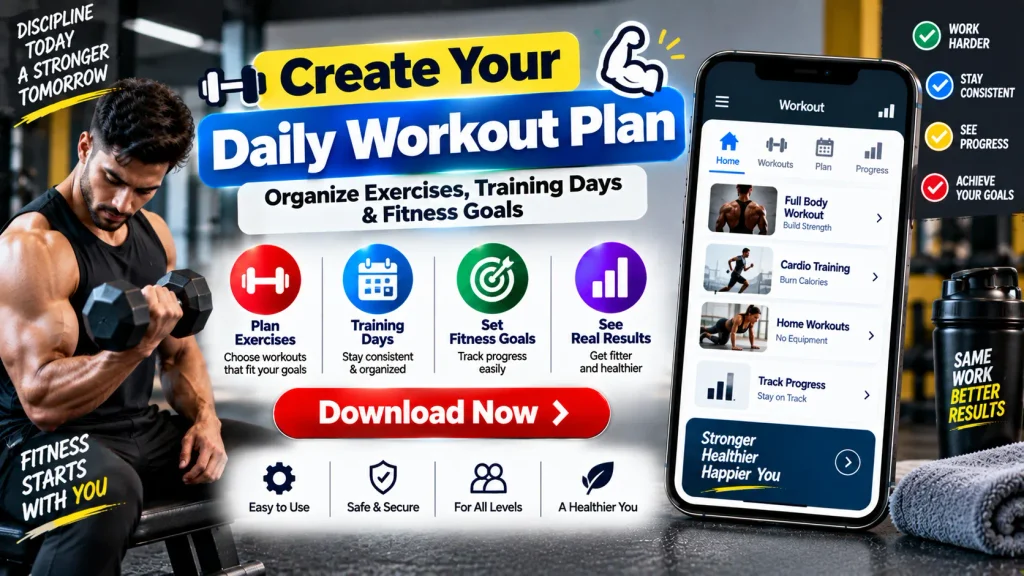
You can create your plan in a notebook, spreadsheet, phone calendar, or workout planner app. Depending on the tool you use, you may also be able to record exercises, sets, repetitions, workout duration, training history, and personal fitness goals.
This guide explains how to create a daily workout plan, organize training days, choose exercises, track workouts, and build a routine that fits your schedule and current fitness level.
What Is a Daily Workout Plan?
A daily workout plan is an organized schedule showing the physical activities or exercises you intend to perform on particular days.
For example, a workout plan might include strength training on certain days, aerobic activities such as walking or cycling on others, and appropriate recovery or lighter-activity days.
Your plan may contain:
- Training days
- Exercise names
- Sets and repetitions
- Cardio sessions
- Workout duration
- Rest or recovery days
- Personal fitness goals
- Completed workout records
The purpose is to give your training structure rather than choosing exercises randomly every day.
Daily Workout Plan – Quick Overview
| Workout Element | What to Plan |
|---|---|
| Fitness Goal | Define what you want to work toward |
| Training Days | Choose realistic workout days |
| Exercise Selection | Pick exercises suitable for your ability |
| Strength Training | Organize major muscle-group exercises |
| Cardio | Add suitable aerobic activities |
| Sets & Reps | Record them when relevant |
| Workout Duration | Plan manageable sessions |
| Recovery | Include appropriate rest/recovery |
| Tracking | Record completed workouts |
| Progress Review | Review and adjust your routine over time |
Start by Defining Your Fitness Goals
Before creating an exercise schedule, think about what you want from your routine.
Different people may have different goals. You may want to become more physically active, improve general fitness, build strength, develop a regular gym habit, improve endurance, or simply organize your existing training.
Your goals should be realistic and appropriate for your current circumstances.
Instead of expecting a dramatic transformation in a few days, focus on habits that you can maintain consistently.
You can also break a larger fitness goal into smaller targets. For example, your first goal might simply be completing your planned workouts consistently for several weeks.
Choose Realistic Training Days
One common mistake when creating a new workout routine is scheduling more training than you can realistically maintain.
Look at your weekly schedule and decide which days are practical for exercise.
Someone who has three reliable training opportunities each week may benefit more from a consistent three-day routine than an ambitious daily schedule that is repeatedly missed.
Your plan can also include walking, cycling, recreational activities, or other forms of physical activity outside formal gym sessions.
For general health, adults are commonly advised to accumulate regular aerobic activity and muscle-strengthening activity across the week. Individual ability, health, and circumstances should always be considered.
Organize Your Exercises
Once you have selected your training days, decide which exercises you intend to perform.
Your exercise selection may include movements for major muscle groups such as:
- Legs
- Chest
- Back
- Shoulders
- Arms
- Core
You may also include aerobic activities such as walking, running, cycling, swimming, or using cardio equipment.
You do not need dozens of different exercises in one workout. A manageable routine that you can perform with appropriate technique may be easier to follow.
If you are unfamiliar with an exercise, consider learning proper technique from a qualified fitness professional rather than copying advanced movements without adequate instruction.
Create a Simple Weekly Workout Schedule
A weekly schedule can make your daily plan easier to understand.
For example, a routine could contain several strength-training days, aerobic or lighter-activity days, and recovery periods.
There is no single weekly split that is appropriate for everyone. Your training experience, available time, fitness goals, recovery, health, and exercise preferences all matter.
Beginners may find a relatively simple routine easier to manage than highly specialized bodybuilding-style schedules.
The goal is to build a structure you can follow—not to copy another person’s routine exactly.
Add Strength Training to Your Plan
Strength or resistance training can be included as part of a balanced fitness routine.
Depending on your equipment and experience, resistance exercises may use:
- Body weight
- Dumbbells
- Barbells
- Resistance bands
- Cable machines
- Weight machines
When creating your strength training plan, record the exercises you intend to perform and, where appropriate, the planned sets and repetitions.
Your workout tracker can also record the resistance used during completed sessions.
Avoid increasing resistance simply to make the numbers in an app look better. Proper technique and manageable progression are more important than competing with an app record.
Add Cardio and Aerobic Activity
Aerobic activity can also be incorporated into your daily workout schedule.
Common options include brisk walking, cycling, jogging, swimming, dancing, treadmill workouts, and other activities that increase physical activity levels.
You can record the type of activity, approximate duration, or distance where relevant.
For adults, widely used public-health guidance recommends at least 150 minutes of moderate-intensity aerobic activity per week, or an appropriate equivalent of vigorous activity, with additional benefits possible at higher levels.
People who are currently inactive can start with smaller amounts and gradually build their activity rather than trying to reach a large target immediately.
Plan Sets, Repetitions and Training Volume
If your workout includes resistance exercises, you may want to record sets and repetitions.
For example, your workout planner might contain an exercise followed by the number of planned sets and repetitions.
However, there is no universal set-and-repetition combination that is best for every person and every fitness goal.
Training volume should reflect your experience, exercise selection, ability, recovery, and goals.
Beginners should avoid copying very high-volume routines created for experienced athletes.
If you are uncertain about how to structure resistance training safely, a qualified fitness professional can help create an appropriate program.
Include Warm-Up and Cool-Down Time
Do not design your schedule so tightly that you have no time to prepare for your workout.
Depending on your activity, an appropriate warm-up may help prepare you for the movements you are about to perform.
This can involve light activity and movement preparation relevant to your planned workout.
After training, you may choose to gradually reduce activity rather than stopping an intense session abruptly.
Warm-up and cool-down needs can vary according to the exercise and individual, so they should be appropriate to your activity.
Don’t Forget Recovery
A daily workout plan should include recovery, not just exercise.
Training creates physical demands, and adequate recovery helps you continue exercising consistently.
Your plan may include complete rest days or lighter-activity days depending on your routine.
Sleep, nutrition, hydration, stress, training intensity, and overall workload can all influence recovery.
Avoid treating an app streak as a requirement to complete intense exercise every single day.
If you are unusually fatigued or experiencing significant pain, continuing a demanding workout simply to maintain a streak may not be appropriate.
Use a Workout Planner App
A Workout Planner App can make daily exercise organization easier.
Depending on the application, you may be able to create custom workouts, select training days, record exercises, and save your workout history.
Common features may include:
- Exercise planner
- Sets and repetitions tracker
- Workout timer
- Training calendar
- Workout history
- Progress charts
- Exercise library
- Training reminders
- Personal notes
- Fitness goal tracking
Features vary between applications, so choose a tool that is easy to understand and matches what you actually need.
A simple phone note or calendar can also work if you do not need advanced tracking features.
Track Your Daily Training
Planning is useful, but recording what you actually complete can provide additional information.
After each workout, you might record:
Exercise: What movement did you perform?
Sets and repetitions: How much training did you complete?
Resistance: What weight or resistance did you use, where applicable?
Duration: How long did your session or aerobic activity last?
Notes: Did anything feel unusually easy, difficult, or uncomfortable?
Over time, this creates a training history that you can review when planning future workouts.
Review Your Workout Progress
A workout plan should not remain unchanged forever.
Review your training history periodically and ask whether the routine still fits your goals and schedule.
You may notice that certain exercises no longer suit you, that your available training days have changed, or that your current routine is too difficult to recover from.
Make reasonable adjustments rather than changing your entire plan after every workout.
Progress can appear in many forms. It might mean better exercise technique, improved consistency, greater strength, increased endurance, or simply becoming more physically active.
Avoid judging progress solely by body weight or calories shown by a fitness app.
Beginner Daily Workout Planning Tips
If you are just starting, keep your plan relatively simple.
Choose a manageable number of training days and learn basic exercises before adding more complicated movements.
Start at an appropriate level rather than attempting to match someone who has trained for years.
Gradually increase activity as your fitness and confidence improve.
Focus on consistency rather than trying to make every workout extremely difficult.
A workout that looks impressive on paper is not useful if it is too demanding to follow consistently.
Exercise at Home or in the Gym
Your daily workout plan does not necessarily require a gym membership.
A home workout may include bodyweight exercises or movements using equipment such as resistance bands or dumbbells.
A gym may provide access to additional resistance machines, free weights, cables, and cardio equipment.
You can also combine home and gym sessions.
The best environment for your routine depends on your available equipment, experience, preferences, schedule, and fitness goals.
Avoid Common Workout Planning Mistakes
When building your exercise routine, avoid making the plan unnecessarily complicated.
Do not copy another person’s program without considering your own experience and circumstances.
Avoid adding excessive exercises simply because an app provides a large exercise library.
Do not ignore recovery because you want to maintain a daily streak.
Avoid rapidly increasing training volume or resistance beyond what you can safely manage.
And importantly, do not continue an exercise through concerning pain simply because it appears on your planned schedule.
Your plan should guide your training, not force you to ignore warning signs.
Stay Consistent With Your Fitness Routine
Consistency often becomes easier when your workout routine fits naturally into your daily life.
Choose training times that are practical and use calendar or app reminders if they help.
Prepare gym clothes or equipment in advance when possible.
Keep your workout plan easy to access on your phone.
If you miss one training day, it does not mean the entire plan has failed. Return to your routine when appropriate rather than trying to compensate with an unnecessarily extreme workout.
A sustainable approach is usually more practical than repeatedly starting aggressive plans that are difficult to maintain.
Frequently Asked Questions (FAQ)
1. What is a daily workout plan?
A daily workout plan is an organized schedule of exercises, training days, physical activities, and recovery periods designed to give your fitness routine structure.
2. How do I create my own workout plan?
Start by defining your fitness goals, choosing realistic training days, selecting appropriate exercises, and deciding how you will track completed workouts.
3. Can beginners create a workout plan?
Yes. Beginners can start with a simple routine and gradually increase activity as their fitness, experience, and confidence improve.
4. Do I need to exercise every day?
No. A workout plan can include training, lighter activity, and recovery days. The appropriate frequency depends on your activity, fitness level, goals, and individual circumstances.
5. Can I use a Workout Planner App?
Yes. Workout planner apps can help organize exercises, training days, sets, repetitions, and workout history. Features vary between apps.
6. Should my workout plan include cardio?
Aerobic activity can be part of a balanced exercise routine. Walking, cycling, running, swimming, and cardio machines are common options.
7. Should I include strength training?
General adult physical-activity recommendations include muscle-strengthening activities involving major muscle groups on at least two days per week. Individual needs may vary.
8. How can I track workout progress?
You can record exercises, sets, repetitions, resistance, duration, completed training days, and personal notes in a notebook or workout tracking app.
9. When should I change my workout plan?
Review your routine periodically. Changes may be useful when your goals, schedule, fitness level, recovery, or exercise needs change.
10. Can a workout app replace a fitness professional?
An app can help organize and track exercise, but it cannot fully replace individualized instruction, exercise-technique assessment, or professional guidance.
Final Words
Creating a Daily Workout Plan can make your fitness routine more structured and easier to follow. Start by defining realistic fitness goals, selecting manageable training days, and choosing exercises appropriate for your current ability.
Include both exercise and recovery in your schedule. If appropriate for you, combine aerobic activity with muscle-strengthening exercises and gradually build your routine over time.
A Workout Planner App or exercise tracker can make it easier to organize workouts, record sets and repetitions, monitor training history, and keep your fitness goals in one place. However, app numbers and streaks should support your routine rather than control it.
The most useful workout plan is one that fits your schedule, ability, and goals and that you can follow consistently while exercising safely.
Disclaimer: This article is for general informational and educational purposes only and is not individualized medical or fitness advice. Exercise needs and limitations differ between people. If you have an injury, chronic medical condition, disability, concerning symptoms, or uncertainty about which exercises are appropriate for you, consult an appropriate healthcare professional or qualified fitness professional before starting or substantially changing an exercise program.